
A year ago, the Third Army Corps became the first corps in the Armed Forces of Ukraine to take brigades under command and deploy them into combat formations. Today, it remains the only corps fighting with its own subordinate units within its designated sector, holding more than 150 kilometers of the front line—roughly 12 percent of the active line of contact. How was this achieved?
The answer lies in a systematic approach: reforms in command and control, training, and technology that the Third Corps has consistently implemented across both its organic brigades and attached units.
One of the key pillars of this effort is the non-commissioned officer (NCO) corps. In NATO militaries, NCOs form the backbone of combat effectiveness. In a mobilized army, where a corporate executive and a schoolteacher may end up sharing the same trench, the Soviet-era model of the sergeant as little more than a supervisor or disciplinarian simply does not work. Respect for rank alone cannot be taken for granted.
The corps is building a different model—one in which the sergeant serves as a leader and mentor whom soldiers follow because of proven competence and personal example. The principle is straightforward: "Do as I do." If a soldier is assigned a physical corrective exercise, the sergeant performs it alongside him.
The man responsible for implementing these principles across the entire corps today is Volodymyr “Bob,” the Corps Command Sergeant Major of the Third Army Corps.
He belongs to a generation of servicemen for whom the Russo-Ukrainian War has already lasted more than a decade. In 2014, he volunteered to defend the country, fought in the battles of the Donbas, served in Marinka, Ilovaisk, and Shyrokyne, and later worked in military intelligence. After the start of the full-scale invasion, he helped push Russian forces away from Kyiv.
In an interview with Ukrinform, “Bob” spoke about his combat experience, the changing character of modern warfare, cooperation between commanders and personnel, the psychological resilience of servicemembers, and his vision of what the Ukrainian military and the Ukrainian state should look like after victory.
I SPENT THREE MINUTES IN RUSSIAN CAPTIVITY
Ukrinform (UI): Tell us about yourself: where are you from, what did you do in civilian life, and how did your military journey begin?
Volodymyr “Bob” (VB): I'm from Chernihiv. My military service began in 2014. At that time, I joined the Azov Battalion, which then reported to the Ministry of Internal Affairs. I was assigned to the legendary 2nd Company, which was later commanded by my friend Kirt.
I started out as a private, later became a squad leader, and at times served as an acting platoon commander. I took part in the battles for Marinka, Ilovaisk, Shyrokyne, and several other sectors. Later, I transferred to reconnaissance, where I served as the commander of a combat reconnaissance team.
In 2018, I left military service. In civilian life, I worked as an argon welder. Then, in 2022, I naturally returned to the military. At the beginning of the full-scale invasion, I joined the 72nd Separate Mechanized Brigade named after the Black Zaporozhians.
At the time, several of my comrades and I—all former Azov servicemen—came to Kyiv and found out which Armed Forces unit was responsible for defending the capital. It turned out to be the 72nd Brigade. We got in touch with the commander of its reconnaissance platoon, met with him, and by the very next day we were back in uniform and on duty.
UI: On which other fronts did you fight? Was there ever a moment when it felt like the situation was hanging by a thread?
VB: Honestly, I can't recall any situations that I would describe as being on the brink. After the defense of Kyiv, we carried out missions within the 72nd Brigade in the Lysychansk sector—in the area east of Bakhmut, around the settlements of Vrubivka, Mykolaivka, and others. Later, we were redeployed somewhat farther south.
I don't remember any true deadlocks, but there was one interesting incident: at one point, I spent about three minutes in Russian captivity.
UI: How did that happen?
VB: We were conducting a reconnaissance mission assigned by headquarters—specifically, a direct inspection of a designated area of terrain. We advanced into the assigned sector and discovered military equipment there. We pulled back and reported the find. Headquarters informed us that everything was fine, explaining that our troops were operating in that area and had entered it a little earlier. So, we were told to continue the mission.
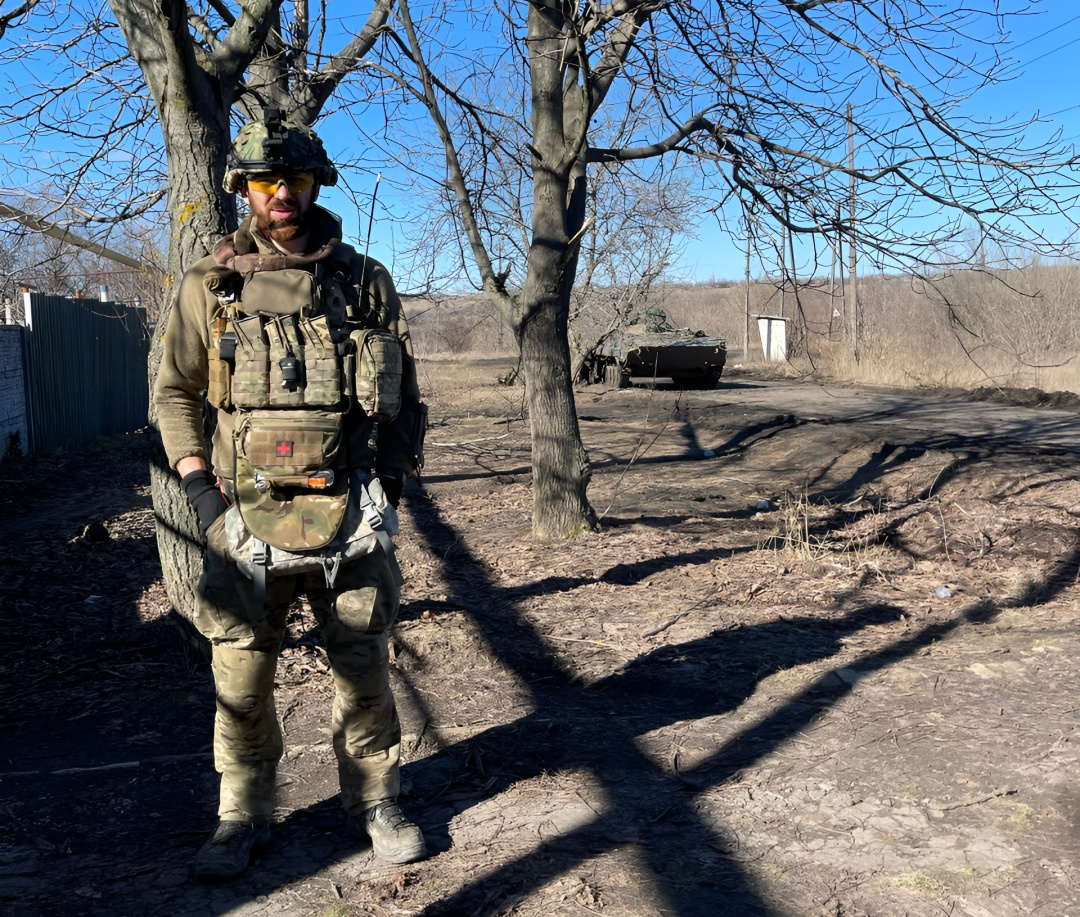
My partner and I returned to the trenches. It was only after we started talking to the people there that we realized they were not our troops but the enemy.
What threw us off was that some of the Russian soldiers were wearing elements of the Ukrainian MM-14 camouflage pattern. My partner refused to believe they were Russians right up until the moment they reported over the radio that they had “caught two Germans”—meaning us.
After that, they covered us with their weapons from the trenches. But I quickly realized that the people trying to take us prisoner were not acting very professionally. We had already been standing in front of them for about a minute with our weapons still in our hands, yet no one had ordered us to drop them or tried to take them away. Instead, they were busy making reports over the radio.
My partner and I exchanged glances and agreed that we would try to break contact and withdraw.
UI: Sorry, but I couldn't help laughing at that.
VB: That's perfectly fine. To be honest, I didn't really believe we'd be able to get away unharmed. At best, I thought we might make it out wounded. But even that seemed like a better option than ending up in captivity.
We took off immediately. Thanks to the terrain, we were able to disappear into the tree line almost at once. My partner, by the way, is left-handed, and he even managed to return fire while we were breaking contact. In the end, we got away.
But technically speaking, we did spend about three minutes in captivity.
UI: Where did your callsign "Bob" come from?
VB: Actually, it dates back to my teenage years. I had a T-shirt with a picture of Bob Marley on it, and my friends started calling me Bob.
My first name is Volodymyr. The short form is Vova. If you play around a bit with the English spelling and pronunciation, somehow it eventually turns into "Bob."
I think it's a good callsign. It's short—just three letters, two of which are the same. It's easy to hear over the radio, easy to pronounce, and hard to confuse with anything else. Besides, it reads the same from left to right and from right to left.
WITHOUT THE ABILITY TO UNDERSTAND PEOPLE, YOU'RE UNLIKELY TO SUCCEED AS A LEADER
UI: With the transition to the corps system, the position of Corps Command Sergeant Major was introduced. How would you explain to a civilian what a Command Sergeant Major is actually responsible for in practice, not just on paper?
VB: I am a supporter of the official definitions laid out in the governing documents. They are precise and provide a good general understanding of the position. But if I had to explain it to a civilian in simple terms, I would use a phrase that I particularly like:
A sergeant is the commander's hands and the soldier's voice.
In my view, that description accurately captures not only the role of a Corps Command Sergeant Major, but the role of a sergeant in general.
Through sergeants, commanders are able to influence the many processes taking place within a unit. It is the sergeant who communicates the commander's intent, vision, and policies to the troops. At the same time, the NCO chain serves as a channel through which problems from lower levels can be brought upward—allowing soldiers' concerns to be heard and addressed at the appropriate level.
As for my own responsibilities, as Corps Command Sergeant Major I collect and address concerns raised by personnel and try to resolve them within my authority. If a matter requires the commander's involvement, I report it to him.
I also work on improving communication between units, coordinating training, and addressing personnel matters—particularly decisions regarding who should fill NCO positions. Another major area of focus is building an effective and capable NCO corps throughout the formation.
In my view, this description accurately captures not only the role of a Corps Command Sergeant Major, but the role of a sergeant in general.
Through sergeants, commanders can influence a wide range of processes within a unit. It is the sergeant who communicates the commander's intent, vision, and policies to the troops. At the same time, the NCO chain provides a mechanism for bringing problems from lower echelons to higher headquarters, conveying soldiers' concerns, and seeking solutions at the appropriate level.
UI: Your commander, Andriy Biletskyi, recently said that sergeants are the backbone and foundation of military combat effectiveness, reflecting a NATO-style approach that units of the 3rd Army Corps have successfully implemented. However, you also work with other formations. How would you describe that interaction?
VB: To answer that, it is probably worth first explaining what we mean by the NCO corps.
The NCO corps consists of several functional tracks.
The first is the command track: squad leaders and command sergeants at every level, from platoon to corps.
The second is the instructor track, which includes NCO instructors serving in brigades and other military units.
The third is the staff NCO track. Today there are staff NCOs of various categories who support headquarters functions within military formations.
And the fourth is the specialist NCO track: medics, logisticians, mechanics, and other technical specialists who hold NCO ranks.

So, in essence, the NCO corps is built around these four main components.
It is also important to understand that a sergeant does not necessarily spend an entire career following a single path. For example, someone may serve as a company first sergeant, later move into a staff NCO position, and eventually become a battalion command sergeant major. Career progression within the NCO corps can move across different functional areas depending on experience, skills, and the needs of the service.
UI: And what about your specific area of responsibility?
VB: Within the sector of the Third Army Corps, there are both brigades organic to the corps and units that operate under its operational control while remaining outside its formal organizational structure.
These include the 66th Separate Mechanized Brigade, the 120th Separate Territorial Defense Brigade, the 117th Territorial Defense Brigade, and the 3rd Border Guard Detachment.
Frankly, we have been fortunate with the units attached to the corps.
The reason is simple: the leadership of these formations shares our principles and approaches to command, personnel management, and professional development. This applies to both officers and NCOs.
At the command level, this includes the implementation of the battle captain system at command posts, as well as common approaches to planning and organizing operations. Within the NCO chain, we have complete mutual trust, understanding, and a shared vision of the role and place of sergeants within military units.
UI: A company, battalion, or brigade command sergeant major is often seen as a soldier's friend and brother-in-arms. But who is the Corps Command Sergeant Major to an ordinary servicemember?
VB: From time to time, both I and the brigade command sergeants major communicate directly with enlisted soldiers. For example, we recently worked with the 60th Brigade, where we spoke with troops who had spent extended periods on front-line positions. We were studying their experience so that we could later share the best practices across other units.
So yes, we absolutely communicate directly with enlisted personnel. However, if we look at the classic NATO or American model, that kind of interaction is not particularly common.
UI: What exactly isn't considered normal in their system?
VB: I've spoken with foreign servicemembers, and in their armies—especially in formal settings—it is relatively uncommon for enlisted soldiers to communicate directly even with a battalion-level command sergeant major. In our military, this happens much more frequently.
I suppose this is one of the distinctive features of Ukrainian military culture. In Western militaries, hierarchy and adherence to the chain of command tend to be more pronounced.
UI: So is that approach an advantage or a disadvantage for us?
VB: I would say it is simply one of our characteristics.
I would say it is simply one of our characteristics. I think it largely goes back to the Cossack era. Ukrainians have always been inclined toward more direct communication between different levels of leadership, and to some extent that tradition has been preserved in the military.
UI: What is the essence of NCO leadership for you? What is something that cannot be taught in courses or written into regulations, yet without which a sergeant cannot truly succeed in wartime?
VB: Probably humanity and empathy.
Those are things that cannot be taught in a course or codified in any regulation. A person either possesses them or does not.
In war, a sergeant works not only with weapons or paperwork. Above all, he works with people. That is why humanity and empathy are of enormous importance.
If you do not genuinely care about your people, if you cannot understand their concerns, motivations, and problems, then you are unlikely to become an effective leader. Technical knowledge, procedures, and management skills can all be learned. But the ability to understand people and earn their trust comes from character. In wartime especially, soldiers quickly recognize whether a leader truly cares about them or is merely wearing a rank.
UI: How does a sergeant work with soldiers who are afraid, exhausted, or burned out, yet continue to hold their positions?
VB: We work closely with the Personnel Psychological Support Department. Our corps has professional psychologists who deal with such issues at an expert level.

In addition, one of the distinctive features of our corps is the institution of khorunzhyi officers, who are also part of the personnel psychological support system. They help servicemembers find additional motivation, develop a proper sense of purpose, and maintain inner resilience and endurance.
Sergeants, psychologists, and khorunzhyi officers all work toward the same goal: ensuring that soldiers maintain psychological resilience even under the most difficult conditions.
The objective is not simply to keep a soldier in the fight. The objective is to preserve the person's ability to function effectively, maintain mental resilience, and continue serving without reaching a breaking point. That requires a coordinated effort from leaders, psychologists, and support personnel working together.
At the same time, the sergeant's role remains critically important. A sergeant is usually the first person to notice changes in a soldier's condition because he serves alongside them every day and knows their personalities, habits, and normal patterns of behavior.
When a soldier is exhausted, stressed, or experiencing emotional burnout, the sergeant must recognize it in time, maintain communication with the individual, and, when necessary, involve specialists. The key is not to ignore the problem and not to allow a servicemember to face it alone.
In combat conditions, fear, fatigue, and emotional strain are natural reactions. The question is not whether a soldier experiences them, but how the unit and its leaders help that soldier cope and remain effective. That is where cooperation between commanders, sergeants, and military psychologists becomes essential.
IF A ROBOTIC SYSTEM CAN REPLACE A SOLDIER, WE SHOULD USE IT.
UI: Over the years, the nature of warfare has changed dramatically. To what extent have drones and technology altered the very logic of combat? Is there still a place for conventional battles?
VB: Drones have had an enormous impact on modern warfare. That is beyond dispute. What I would particularly emphasize is how much more difficult conditions have become for the ordinary infantryman. When enemy UAVs are constantly operating overhead, the entire nature of front-line service changes fundamentally.
If I compare today's battlefield with the period when I personally served on forward positions, the demands placed on soldiers are now significantly higher.
In many respects, today's infantryman is expected to possess skills that were once associated primarily with professional reconnaissance personnel. These include the ability to remain in a single position for extended periods, maintain effective camouflage, avoid revealing one's location, operate autonomously, and sometimes continue functioning despite disruptions in supply and support.
UI: In other words, we are talking about serious survival skills.
VB: Exactly. Those skills have become part of the basic requirements for an ordinary soldier. This is one of the clearest examples of how technology has transformed the character of modern warfare.
At the same time, direct small-arms engagements remain a routine part of combat operations, both in defense and during offensive actions.
Even in the fifth year of the full-scale war, infantry continues to destroy the enemy in close combat and firefights. So, it would be wrong to claim that drones are fighting the war on their own. Drones have become an extraordinarily important component of the battlefield, but they have not replaced infantry altogether.
UI: How do you view the Russian occupiers today? What have they adapted to most successfully, and what lessons should we draw from that?
VB: That's a very broad question, but I can share a few personal observations.
An authoritarian system has undeniable shortcomings, but in wartime it can provide certain advantages in the short term. In Ukraine, human life and human dignity are regarded as the highest values. In Russia, the interests of the state and empire take precedence. As a result, they are prepared to pay virtually any price to achieve their objectives, including in human lives.
That willingness to absorb enormous losses gives them a degree of operational persistence that cannot be ignored. It does not mean they are more effective or more capable in every respect, but it does mean they are often willing to continue pursuing objectives despite casualties that would be politically, morally, or socially unacceptable in many other countries.
Understanding this reality is important. When assessing the enemy, it is necessary to evaluate not only their equipment, tactics, and technology, but also the political and cultural factors that shape their decision-making and their tolerance for losses.
Without question, one of the enemy's key strengths remains its industrial capacity. Russia possesses vast territory, substantial manufacturing capabilities, and the ability to scale the production of weapons, military equipment, and new technological solutions.
For us, this is objectively more difficult. We are constrained both territorially and industrially. In addition, the enemy constantly seeks to identify and strike our production facilities.
That said, they also have significant weaknesses.
First and foremost is their archaic and excessively centralized system of military command. In many cases, decisions must be approved at higher levels, which slows the process, reduces flexibility, and reduces flexibility.
In my view, this is one of the most important systemic weaknesses of the Russian military.
UI: What is the biggest problem on the front today: a shortage of personnel, time, resources, or something else?
VB: In war, there is always a shortage of something—time, people, equipment, or resources.
That is probably one of the defining characteristics of any war: there is never a moment when you can say that you have enough of everything and need nothing more.
UI: Your commander made an ambitious statement: the goal for the future is to replace up to half of the infantry with robots...
VB: The life of a servicemember is the highest value. If there is an opportunity to replace a human being with a robotic system and thereby save a soldier's life, then we should make use of it.
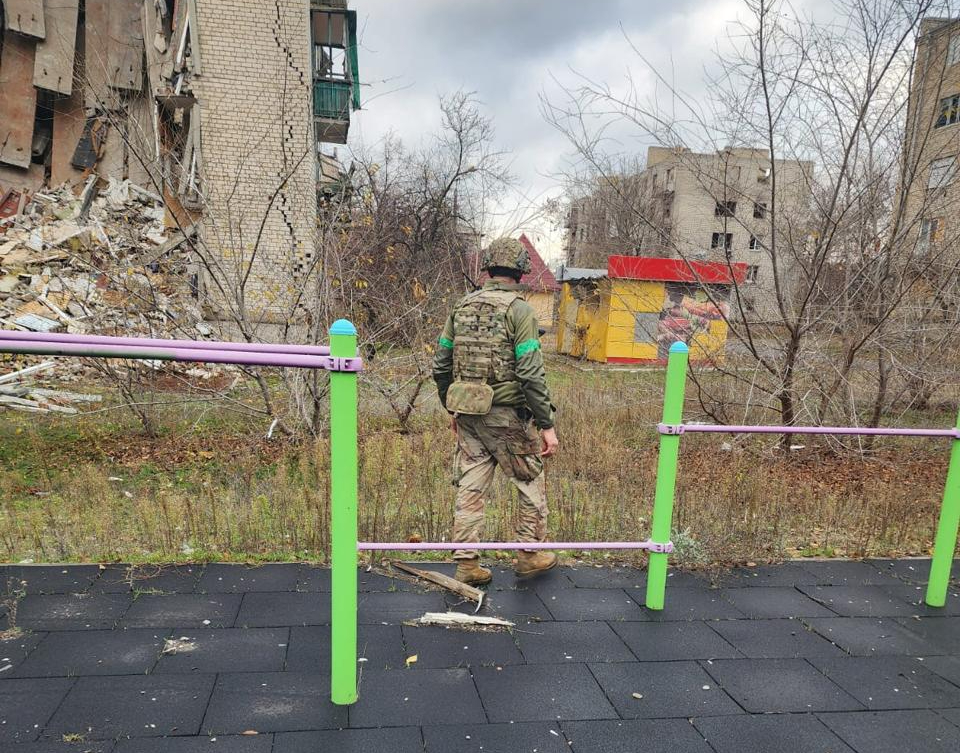
The Third Army Corps is actively developing this area. We devote considerable attention to unmanned and robotic systems, and we already have substantial achievements and tangible results.
So, this is not merely an attractive concept—it is a practical and realistic direction for the development of a modern military.
UI: Do you think a machine could ever replace a human being in war?
VB: Completely? Unlikely.
However, certain specialties, specific functions, and even some elements of the combat formation can certainly be replaced by technology. In fact, that process is already underway.
At the same time, war remains far too complex and unpredictable for human beings to disappear entirely from the battlefield. Technology will continue to take over more tasks, but people will remain at the center of military decision-making and combat operations for the foreseeable future.
A DECISIVE BATTLE FOR UKRAINE'S EXISTENCE IS UNDERWAY
UI: What is more frightening in war: the battle itself or waiting for it?
VB: Fear of death or injury often stems from not fully understanding the actual situation. People begin imagining possibilities, creating scenarios in their minds, and dwelling on what might happen. This is something our psychologists spend a great deal of time helping soldiers work through.
For me, the anticipation of battle has always been far more frightening.
From a psychological perspective, that is entirely understandable. You do not know what awaits you, you cannot fully assess the situation, and you have no complete control over future events.
This becomes especially pronounced when you hold a command position. Other people's lives depend on your decisions, the quality of your planning, and how thoroughly you have thought everything through.
Before a battle, you constantly run different scenarios through your mind, asking yourself whether you have accounted for everything, whether you have made any mistakes, and whether you may have overlooked some critical detail.
But once the fighting begins, a certain sense of calm arrives. You simply start doing your job and focus on your actions.
That is why I repeat: for me, the hardest part has always been the waiting.
UI: Is it even possible to become accustomed to death around you?
VB: I don't think it is possible to truly become accustomed to death. More likely, certain emotions and reactions simply become dulled over time.
The body and mind adapt so that a person can continue carrying out their duties. You try not to dwell on it and instead focus on what needs to be done here and now.
But to say that you can ever fully get used to it would probably be inaccurate.
UI: Have you managed to preserve anything from your pre-war self—hobbies, habits, dreams?
VB: In that regard, I suppose I've been fortunate. There is still room in my life for things that came from peacetime.
For example, I occasionally get the chance to play the bass guitar. I'm not in a band—I simply love the sound of the instrument. During the summer, I sometimes have an opportunity to spend a little time boating.
So I've managed to hold on to some of my hobbies and habits, and I think that's important. Things like that help you maintain a connection with normal life.
UI: If someone opens this interview many years from now, what is the most important thing they should understand about this war?
VB: First and foremost, that it was a decisive battle for the existence of the Ukrainian state.
In essence, this is another chapter in a centuries-long struggle for the right to determine our own future.
And I would very much like this battle to be the one that finally puts an end to our northern neighbor's attempts to destroy Ukrainian statehood or subjugate Ukraine.
UI: What would victory mean to you personally—not in official terms, but on a human level? And what kind of end to this war could be called both just and realistic?
VB: As for justice, a truly just outcome would undoubtedly involve the restoration of Ukraine's 1991 borders, the payment of reparations by the Russian Federation, and accountability for those responsible.
Is that possible right now? If I am being realistic, I consider such a scenario unlikely at this stage.
So, speaking of a realistic outcome, it would mean stopping the enemy along the current front line and building Ukraine's defensive capabilities to such a level that any future attempt at aggression would become unacceptable to the adversary even in theory.
That, in my view, is the minimum condition for a lasting peace: not merely ending the current phase of the war, but ensuring that Ukraine is strong enough to deter any future attempt to destroy its independence.
Myroslav Liskovych led this conversation, Kyiv