
Today’s geopolitical developments point to a period of profound transformation in the international security system. We are facing serious risks of protracted and expanding conflicts and wars, alongside an ongoing reassessment and redefinition of the roles of the United States and NATO as guarantors of global stability.
At the same time, new technologies are reshaping the nature of modern warfare, fueling a new arms race, while Europe is increasingly confronted with the need to ensure its own defense independently.
Escalation in the Middle East must not divert attention from Russia’s war against Ukraine, which remains the central challenge to European security. In this context, Kyiv and Ankara can play an important role in shaping a new security architecture on the continent and in seeking pathways to peace.
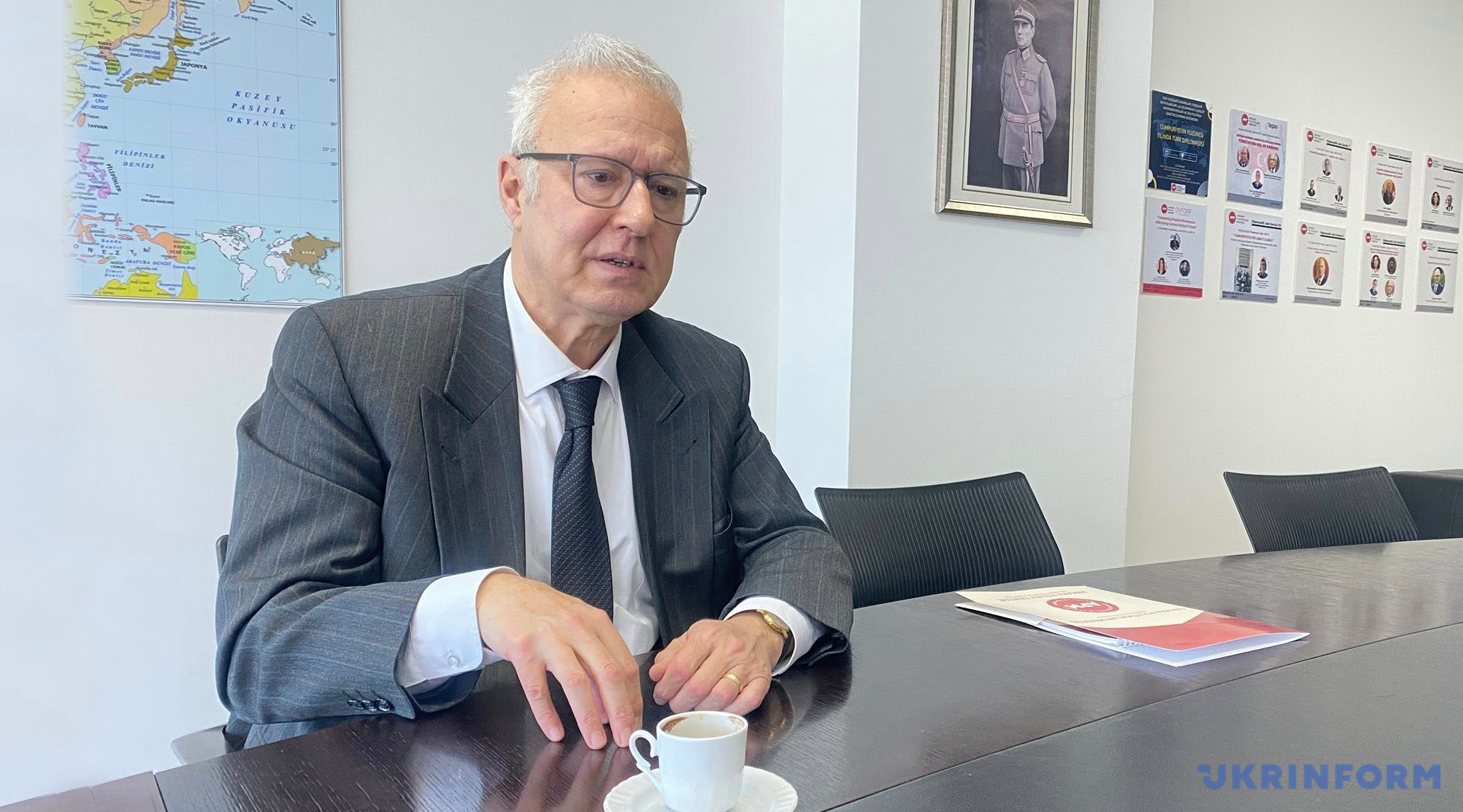
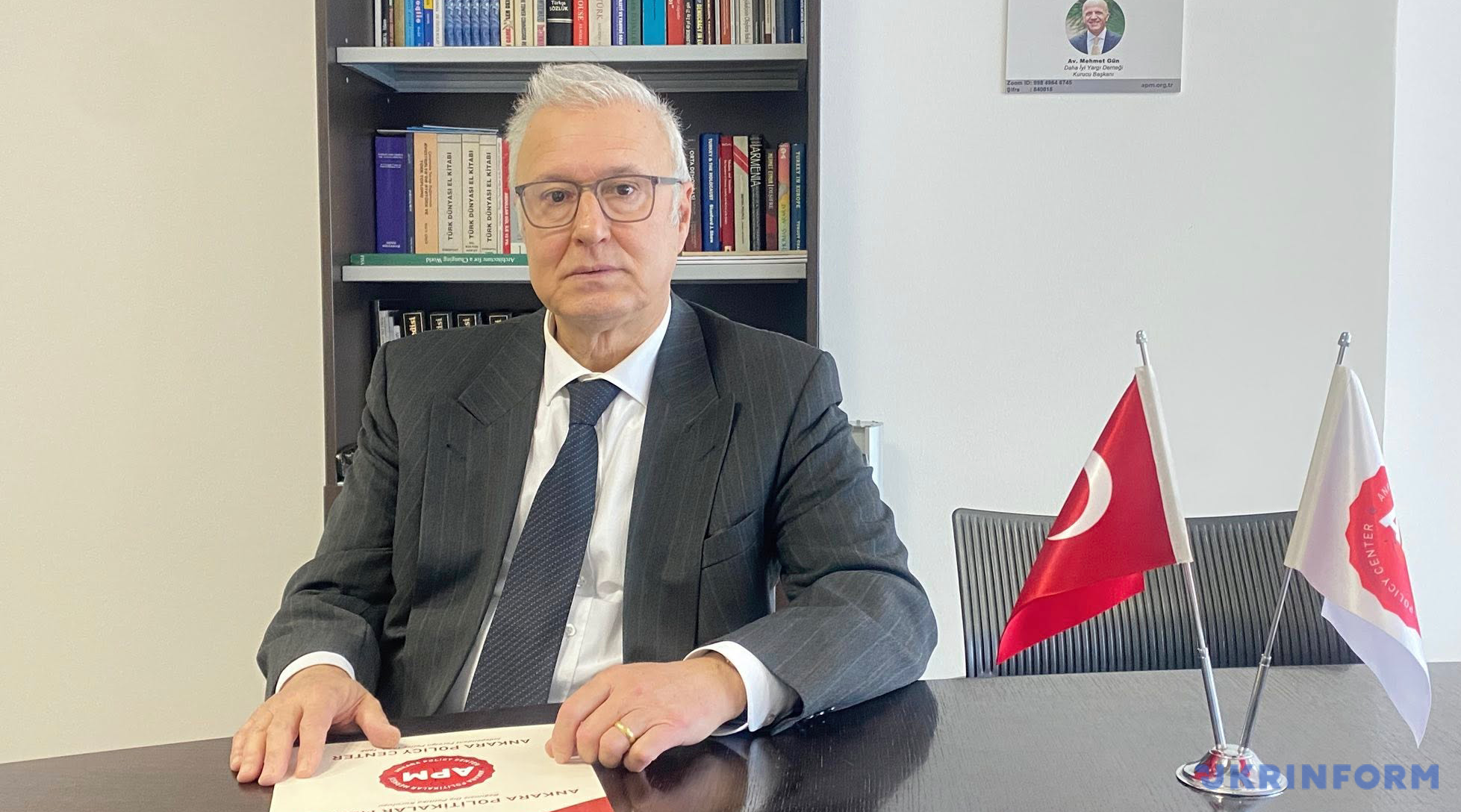
Fatih Ceylan, Turkish Ambassador (R), former Permanent Representative of Türkiye to NATO, President of Ankara Policy Center and the Turkish Atlantic Association, discussed these and other pressing issues in an interview with Ukrinform.

US GROUND OPERATION IN IRAN WOULD RAISE ESCALATION TO UNPREDICTABLE CONSEQUENCES
- Mr. Ambassador, how do you assess the current situation in the Middle East, and how realistic is the scenario of further escalation or expansion of the conflict in the region?
- The current situation in the Middle East is a great source of concern not only for the regional countries, including Türkiye, but also for the rest of the world. Almost all countries with a few exceptions face the dire consequences, for instance, of energy disruption that extends to other domains of life, including but not limited to potential food shortages. The longer the war against Iran continues the higher the effects of a deepening global crisis engulfing the majority of nations.
The probability of further escalation of the conflict cannot be ruled out given the fluidity of the U.S. administration’s ever shifting positions as announced by Donald Trump. Accordingly, it is relevant and valid to inquire whether there indeed exists a clear U.S. strategy in effect that leaves the door open to an off-ramp. In my opinion it is difficult to claim that there is such a U.S. strategy. It seems that the U.S. position is being driven by both Israel and the circumstances on the theatre. And such a worrisome situation raises the terrible specter of a widening conflict.
- Do you think the United States would consider launching a ground operation? If so, what form could it take — securing the Strait of Hormuz, targeting nuclear facilities, or pursuing other objectives — and what are the prospects for such a scenario?
- We see a considerable amassing of U.S. ground troops in the region which tend to give credence to a ground operation. Whether they are there for deterrence purposes for reaching a deal with Iran or conducting ground operations seems nebulous for the time being. Whether certain covert operations are already taking place is also beyond knowledge. In that respect it would not be surprising to see a limited U.S. ground operations to take a number of Iranian islands in the Strait of Hormuz. Such an operation would certainly raise the level of escalation with unforeseen consequences.
WAR AGAINST IRAN DOES NOT WEAKEN BUT RATHER CONSOLIDATES THE REGIME AND UNITES SOCIETY
- Regime change and support for protests have been mentioned among the possible goals of an operation against Iran. How realistic is a regime change scenario in Iran at this point, and what consequences could it have?
- A regime change in Iran in the immediate to medium term is, under present circumstances, unrealistic and unimaginable. The ongoing war against Iran hardens the regime and unintentionally stifles opposition against the regime. It is opening new avenues of resilience not only for the regime but of the Iranian society at large. This, I think, is one of the unintentional consequences of the war initiated against Iran.
The fundamental question is whether particularly the U.S. is ready for a prolonged war intended for a regime change in Iran. Will it keep its endurance for a long time militarily and economically given the intensifying opposition within the American society against the war? To what extent Trump will be ready to carry on with the war against the odds he seems to be facing in respect of the November elections? Will the American establishment consent to this war for an indefinite period whilst the tables are being turned against the U.S. both domestically and externally?
Will the U.S. launch a ground operation against Iran as Trump claims it will do, albeit often in fluctuating terms. If indeed a ground operation is put into practice, it will be prone to escalating the ongoing conflict and throw the region into another cycle of conflict and instability, not to mention its fatal implications for European and global security.
These and similar questions would cast further doubt into the feasibility of a scenario for a regime change in Iran.
ESCALATION IN THE MIDDLE EAST SHOULD NOT REDUCE THE PRIORITY OF RUSSIA’S WAR AGAINST UKRAINE
- Fatih Bey, the escalation in the Middle East has already shifted some attention away from Russia’s war against Ukraine. In your view, how might this affect the course of the war and the prospects for negotiations? And what advantages does Türkiye have as a potential negotiating platform?
- It is true that the attention of the international community has diverted to the Middle East owing to the ongoing war against Iran. However, that does not and should not lessen the priority to the war initiated by Russia against Ukraine. To me it seems clear that both theatres, namely the East and the South, have merged and exacting a heavy toll on regional and global scales. To that effect particularly Europe does not have the luxury of using the war in the Middle East as an alibi to turn attention from the war on Ukraine. And I think it is not acting in that manner. It is evident, however, that both conflicts will have direct consequences for the future of the European security architecture yet to be developed.
Efforts to reach a common ground for peace in Ukraine have not ceased and they should be pursued. However, the “success” or the “failure” of the war against Iran would be consequential for especially the U.S. and might have direct and indirect implications for negotiations to reach a peace deal for Ukraine. It would either strengthen or weaken the hand of the U.S. that seeks to explore a solution to the ongoing conflict in Ukraine. That said given the conciliatory approach of Trump to Putin we cannot be sure whether there would emerge another course of behaviour on the part of the U.S. toward Russia. Therefore, the onus of reaching a just peace deal for Ukraine is on Europe, and that also implies Türkiye’s efforts to find a “European solution” to the ongoing conflict in Ukraine. It would be wise and prudent for Türkiye to continue in its attempts to bring forth a deal between Ukraine and Russia to halt the war without prejudice to Kyiv’s expectations and priorities. This necessitates that Türkiye combine its efforts with those of Europe to attain such an objective. And, I think, we see the traces of Türkiye’s contributions to that effect. Any scheme designed to generating peace for Ukraine that caters for meeting Ukrainian objectives will, I believe, be supported by Ankara.
UKRAINE’S SUPPORT IN STRENGTHENING GULF AIR DEFENSE IS A VALUABLE CONTRIBUTION TO REGIONAL SECURITY
- Iran’s attacks on Gulf countries came as a surprise to many of them and have prompted efforts to strengthen their defense capabilities. Ukraine, with its unique experience in intercepting Russian missiles and Iranian-made drones, has offered its assistance. How effective could such cooperation be?
- It is evident that Iranian missile and drone attacks to the Gulf countries has opened a new and different phase in the war against Iran. These attacks have indeed altered the picture in the theatre. Ukrainian assistance to reinforcing anti missile and anti drone capacity of the Gulf states would certainly be an invaluable contribution to the defense of the Gulf. This would also symbolise the indispensable role of Ukraine in a crisis impacting European security. Nevertheless, there would emerge limitations on the extent of such support given the challenge Ukraine faces itself in defending its homeland against the Russian missile and drone attacks. In that regard, it would be legitimate for Ukraine to prioritize its own needs in missile and drone warfare. If, however, Ukraine has an excess capacity that enables it extending its assistance to the Gulf, it would certainly be welcomed by first and foremost by the Gulf countries and the U.S. waging its war with Israel against Iran.
UKRAINE’S RESISTANCE TO RUSSIAN AGGRESSION ON THE BATTLEFIELD IS TRANSFORMING THE NATURE OF MODERN WARFARE
- Recent conflicts show a shift in the paradigm of modern warfare — from heavy, high-tech weaponry to swarms of small drones and highly mobile systems. In your view, how is the global arms market evolving, and is there a risk of a new arms race similar to that of the Cold War?
- It has become apparent that new and disruptive technologies are changing the nature of warfare with all their implications. The war Ukraine is waging against Russia for securing its sovereignty and territorial integrity is a solid case that demonstrates the changing nature of modern warfare.
That said the mere use of such novel capabilities in wars of an asymmetric nature does not obviate the need for conventional forces and capabilities. Consequently, an effective mix of conventional and novel capabilities will be the defining feature of future warfare. This, in turn, would prompt countries to invest more on new and disruptive capabilities in the coming years. A concrete change in military techniques, procedures and doctrine will, therefore, be a main subject for a host of nations. Under present circumstances governed by power politics it would be naïve to forecast that there would not be an arms race reminiscent of the Cold War, albeit under different parameters for warfare.
IF NATO HAD TAKEN A STRONGER POSITION IN 2014, THE FULL-SCALE INVASION COULD HAVE BEEN DETERRED
- Your Excellency, you served as Türkiye’s Permanent Representative to NATO during the period when Russia annexed Crimea and launched its aggression in eastern Ukraine. In light of subsequent developments, and in particular Jens Stoltenberg’s remarks that timely military assistance to Ukraine could have prevented the full-scale invasion, how do you assess NATO’s decisions at the time? Could a more decisive stance by the Alliance have changed the course of events, including preventing the February 2022 invasion?
- When Russia occupied and annexed Crimea there was a divergence of views within NATO. “Old Europe” was in favor of keeping channels of communication with Russia despite its aggression as opposed to “New Europe’s attitude to adopt a more resolute course of action against Russia. The U.S. was trying to navigate between these two positions in a rather ambivalent manner. And the end-result of this divergence led to the compromise reached at the Warsaw Summit of 2016 in the form of a “dual track approach” combining strengthening collective deterrence and defense with maintaining dialogue and engagement with Russia. That approach unfortunately did not yield the desired result and deterrence to prevent Russia from further attacking Ukraine.
Almost all NATO members were talking about developing a “position of strength” to deal with Russia in the wake of the Wales Summit of 2014, but this narrative had not been implemented in practice unlike the situation after Russia launched its large-scale aggression against Ukraine in February 2022.
I tend to think that had there been a stronger position taken by NATO in 2014 like today without prejudice to reaching a more favorable deal then, Russia could have been dissuaded from starting its aggression at such a scale on Ukraine in 2022. However, the subsequent chain of events pursued a different track, and now Europe is facing its biggest security crisis after World War II.
ANKARA’S KEY INTEREST IS TO PREVENT THE REGION FROM SLIDING FURTHER INTO CHAOS
- Türkiye has stated that it seeks to avoid being drawn into the conflict in the Middle East. At the same time, Iran claims it is not launching missiles toward Turkish territory, although NATO air defense systems have already intercepted such missiles. In your view, what does this situation indicate? Are these provocations, or does it point to a lack of control within the Iranian system?
- As things stand now, it is evident that Türkiye is following a prudent, calibrated and balanced position as regards the ongoing Middle East crisis. It is not in the interest of Ankara to see the region slide into further chaos. In view of this clear position Ankara is seeking to explore the means of putting an end to the ongoing war and deploying regional efforts toward finding a common ground for negotiations between the warring parties. Whether these efforts would yield a result remains to be seen.
As for the missile attacks originating from Iran most probably to target the U.S. assets in Türkiye it would be wise for the Iranian leadership to stop such attacks considering that if it continues down this path Türkiye will have to take actions to nip them in the bud. And I believe such a scenario would not be in the best interest of the concerned Iranian authorities.
- Türkiye has demonstrated an ability to effectively balance between major centers of power — NATO, the United States, Russia, and countries of the Middle East. What is the core principle behind this balancing policy, and can Ankara sustain it amid further global escalation?
- The core principle behind the balancing policy adopted by Türkiye facing two major crises, namely the one in Ukraine, and the other in the Middle East, is primarily the lessons learned in the past and challenges posed by the intensifying disorder knocking on the doors of Türkiye. To repeat it is not in the interest of Türkiye to suffer from fragilities and conflicts in its immediate neighbourhood which create shocks and vulnerabilities for Türkiye’s vital security interests. Consequently, the quieter and more stable neighbourhood the better for Türkiye.
I BELIEVE A COMPROMISE ON THE S-400 ISSUE COULD BE REACHED BY THE JULY NATO SUMMIT
- Given your experience at NATO, how do you view the S-400 issue today? Does it remain a source of tension in Türkiye’s relations with the Alliance, particularly at a time when air defense systems have become critically important?
- The procurement of S-400 by Türkiye at a time when relations between NATO countries and Russia were proceeding to a debacle was certainly not the best idea serving Türkiye’s strategic interests. On the contrary it posed a big challenge in Türkiye’s relations with its Allies. This thorny issue is still on the table to be resolved between Türkiye and its Allies, and there seems to be efforts deployed by Türkiye to find a mutually agreeable solution to that sticky problem. I wish to believe that there could be a chance to reach a compromise on that challenge by the time of the NATO Summit to be held in Ankara in July 2026. So, it is better to wait and see what could transpire on the eve of the Ankara Summit.
EUROPE NEEDS TO INCLUDE TÜRKİYE AND UKRAINE IN BUILDING A COLLECTIVE SECURITY ARCHITECTURE
- Mr. Ambassador, do you agree that the world is transitioning to a new model of security, where collective security is gradually losing ground?
- It has become clear that world affairs are undergoing a profound change given the complexity and fluidity of the crumbling old order. The current situation is simply unsustainable and in dire need of reform and rehabilitation. Such a daunting task will certainly take time and be painstaking for all actors.
I must admit that the present U.S. attitude, as officially announced by its National Security and Defence Strategies, has put a serious dent on its reliability and credibility. It has further aggravated the declining security landscape we are all facing now. And there are no signs to indicate that it will change for the better in the foreseeable future. Given the bleak picture and challenges posed by Trump toward European security, I think the U.S. seems determined to proceed in its course while Europe will have to take its destiny, including in security and defense, into its own hands. However, Europe should take on this enormous task in a non-discriminatory manner meaning that it should design ways and means of including countries such as the U.K., Türkiye, Canada and Ukraine whilst building the future of European security architecture if it indeed wants to become a genuine geopolitical actor.
- Are Europe and NATO allies prepared for a scenario in which the U.S. role diminishes, and how might this affect the balance of power? What role could Ukraine and Türkiye play in this context as key Black Sea region actors?
- It would be prudent to think of a seemingly far-fetched scenario where the U.S. remains without Europe and Europe travels without the U.S. in the future. It is equally clear, however, that state of affairs between the U.S. and Europe will not proceed in that direction for the foreseeable future in a transatlantic framework. But Europe will have to close its conventional gaps with the U.S. to the maximum extent possible the sooner the better, and even seriously consider having a nuclear deterrence of its own in the long term.
Presuming that the flow of events will materialize in that direction it would be in the common interest of both Türkiye and Ukraine to combine their efforts to strengthen the evolving European security architecture and seek ways of actively taking part in this comprehensive enterprise. And I believe that Türkiye and Ukraine have the necessary will and capabilities that would reinforce European security with the proviso that the European actors demonstrate a forthcoming attitude toward both countries. The sooner they show the ability to develop a strategic foresight the better for European security.
Olga Budnyk, Ankara