Klimkin: Most difficult EU accession negotiations to be with our neighbors
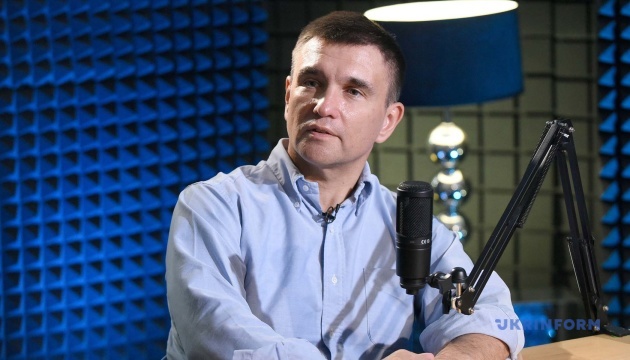
The diplomat made these remarks in an interview with Ukrinform.
Responding to a reporter's question about which EU countries are currently our key allies and where we still need to "persuade" them, Klimkin said, "I really don't like this question. Although I'm not opposed to dividing friends and partners into 'super,' 'good,' and 'bad' categories. There are, obviously, countries with which we will have very difficult negotiations, for example, the Poles. And in general, negotiations with all our neighbors will be difficult. Do you think negotiations with Romania will be easy? They won't," the former government official predicts.
He noted that our country will conduct negotiations directly with the European Commission, which will receive a mandate from member states. And EU member states will defend, as best they can, the advantages they have gained in the markets and their transition periods. And these will be very difficult negotiations with everyone. But with neighbors, it's the most difficult.
"Yes, we have our own interests that overlap with those of the French in agriculture. But there aren't that many, and, ultimately, we can assess where to compromise and where not to. This has to be a win-win situation for everyone. But with our neighbors, it will be much more difficult—I guarantee you that," Klimkin added.
According to him, Ukrainian authorities need to decide right now how to work not only with the political and business elites of EU countries, but also with their civil societies. And in this context, it is the regions themselves that can play a key role by establishing regional partnerships.
"In some countries, such as Germany, Italy, and France, cooperation between regions can be very effective. This cooperation can range from business to emergency services to various intercultural exchanges. There are very powerful regions, for example, in Germany. Bavaria or Baden-Württemberg is a federal state with a GDP higher than that of many countries in the European Union. They're really impressive, but you don't necessarily have to partner with the biggest ones. Sometimes it's also great to work with such flexible, yet small, regions. And these regional partnerships are very important for Bukovina," the former official concluded.
He believes that after the end of hostilities in Ukraine, regional diplomacy could become a key factor in future European integration.
As reported by Ukrinform, Croatia supports Ukraine's EU membership, but Zagreb's experience—having joined the EU as recently as 2013—suggests that Ukraine's accession in 2027 is unrealistic.