
While Russia continues to show no intention of ending the war, Europe is searching for new ways to strengthen its security amid growing challenges, and NATO is preparing for a new phase of internal transformation. At the same time, the political landscape of the post-Soviet region is evolving rapidly—from Moldova and Romania to the South Caucasus.
Can Europe assume greater responsibility for its own security, what decisions can be expected from the upcoming NATO summit in Ankara, and what avenues of European integration remain available to Ukraine?
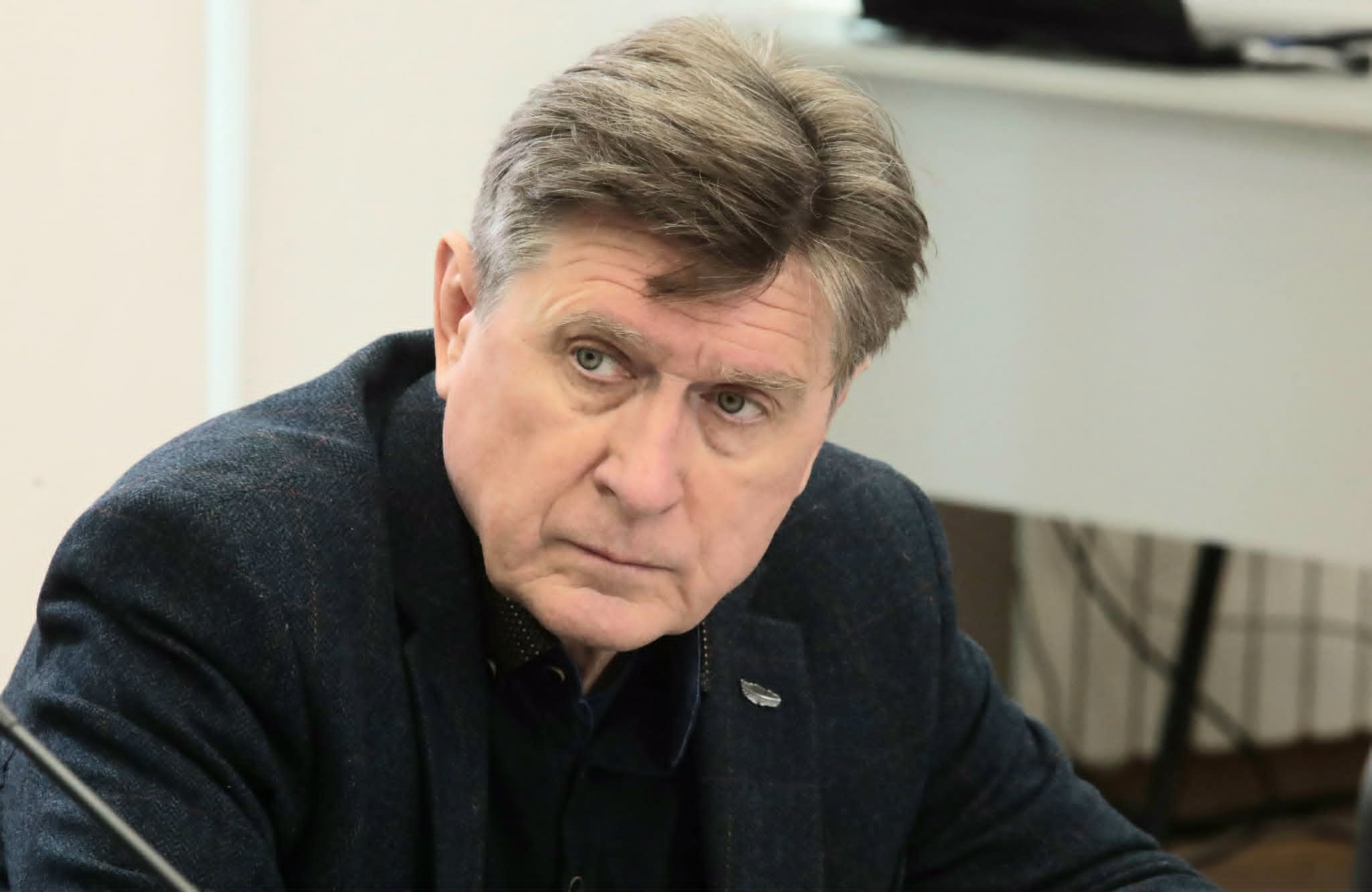
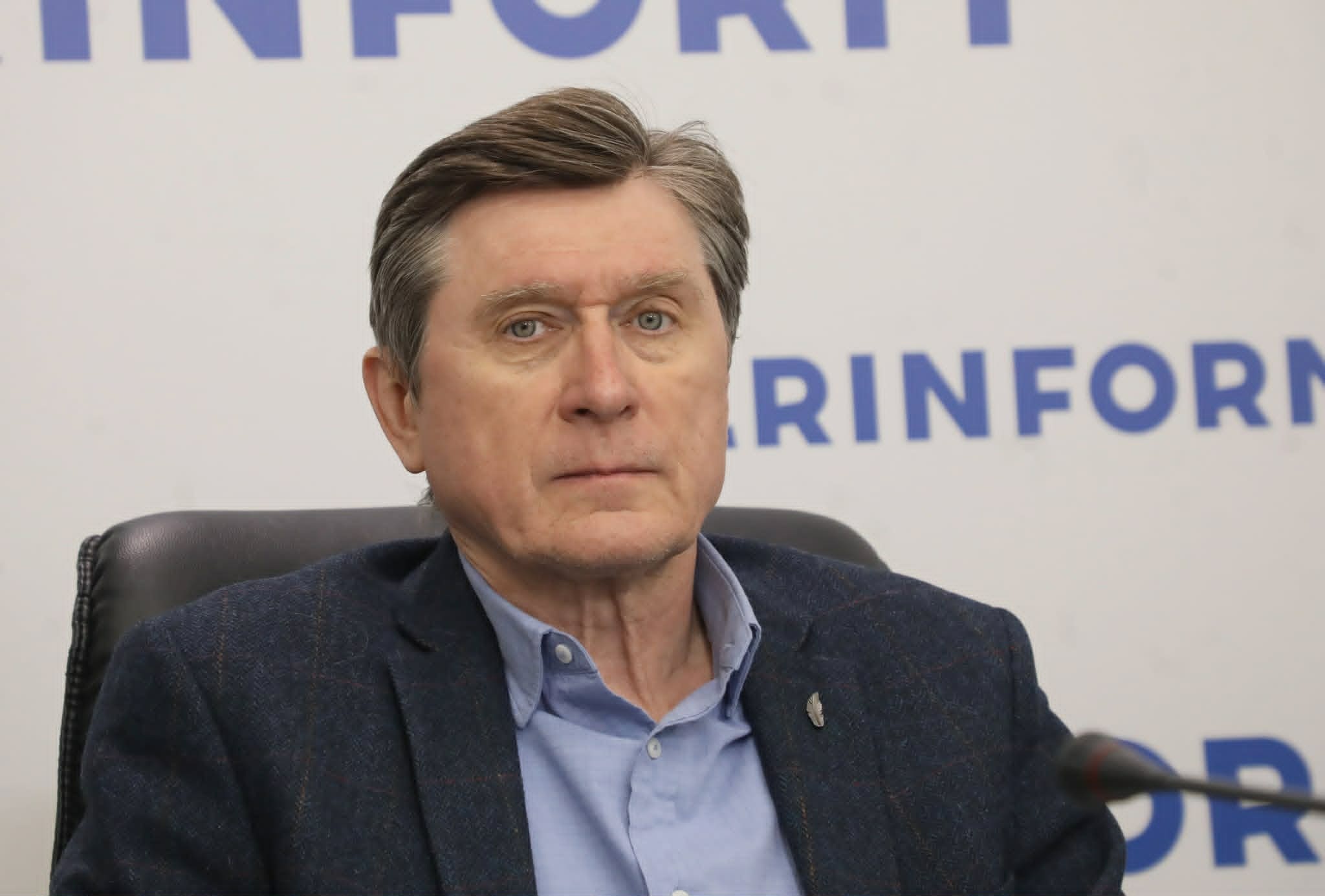
In an interview with Ukrinform, Volodymyr Fesenko, head of the Penta Center for Applied Political Studies, discusses these issues and explains why the Kremlin is gradually losing influence in the South Caucasus, how NATO is changing under growing pressure from Washington, and what opportunities Ukraine should pursue on its path toward European integration.
THE KREMLIN ALREADY UNDERSTANDS IT CANNOT DEFEAT UKRAINE
UkrInform (UI): The leaders of the United Kingdom, France, and Germany recently met in London with the President of Ukraine. They outlined several key principles for a future peace settlement, including a ceasefire, the inadmissibility of changing borders by force, security guarantees for Ukraine and Europe, and the freezing of Russian sovereign assets until compensation is paid. Could these agreements become a genuine foundation for future negotiations?
Volodymyr Fesenko (VF): What matters at this stage is that Ukraine and three influential European powers have formulated a common position on the conditions for a future peace process. However, for this position to become the basis of future negotiations, it must first secure the support of U.S. President Donald Trump. The next step would be to revive the peace process and ensure meaningful European participation in it.
The most difficult task will be persuading Russia to accept these principles. The key element of the agreements reached is that the peace process must begin with a ceasefire. That should serve as the foundation for any subsequent peace negotiations.
UI: If we assume that issues not reflected in the official statements were discussed behind closed doors in London, what might they have been?
VF: Any serious negotiations always have a closed-door component. Official statements are only the tip of the iceberg—the public manifestation of agreements that have already been reached. Behind the scenes, however, discussions focus on the mechanisms for achieving those outcomes and the specific steps needed to implement them.
Most likely, the participants discussed how to influence Trump during the G7 summit, how to convince him of the need to rethink the current logic of the peace process, when and under what conditions negotiations should be resumed, and how to pressure Putin into agreeing to ceasefire talks.
Undoubtedly, difficult questions concerning the future of military support for Ukraine were also on the agenda. In particular, considerable attention may have been devoted to securing additional interceptor missiles and other critically important air-defense capabilities.
UI: Zelensky’s open letter to Putin was effectively left unanswered. What does Russia’s reaction reveal about the Kremlin’s real intentions? Is there anyone there who is assessing the situation realistically?
VF: I believe that when the open letter to Putin was published, the President of Ukraine already had a clear understanding of how the Kremlin leader would respond. That is why the letter contained sharp criticism of both Putin and Russia. However, it was important to elicit a public reaction from the head of the Kremlin regime himself, effectively forcing him to confirm that he has no intention of ending the war at this stage.
This was necessary to dispel any remaining illusions among certain politicians and experts in the United States and Europe about the Russian dictator’s willingness to engage in genuine peace negotiations. At the same time, Ukraine needed to demonstrate its own readiness for talks—not from the position embodied in the so-called “Anchorage formula,” but from a position of strength.
That is why Ukrainian drones first reached Saint Petersburg, followed by an information and political offensive in the form of Zelensky’s letter. The final act was another aerial strike on Russian military facilities in the Saint Petersburg area.
In Russia, including within the Kremlin, many people already understand that defeating Ukraine is impossible and that, sooner or later, Moscow will have to move toward genuine peace negotiations. Putin himself, however, does not appear ready to acknowledge this reality. That is why he must be pressured into changing his position—through developments on the battlefield, strikes deep in Russia’s rear areas, and increased political and economic pressure from the United States and Europe.
At present, the Kremlin is still not prepared for meaningful peace negotiations. However, the launch of such a process is more a matter of timing and circumstances than a fundamental impossibility.
UI: Meanwhile, many experts argue that Russia “lost” the elections in Armenia. How accurate do you consider this characterization, given Nikol Pashinyan’s previous policy of balancing between different geopolitical centers? How do you see Armenia's position evolving and, more broadly, the situation in the South Caucasus developing?
VF: Russia undoubtedly lost these elections. Moscow exerted considerable pressure on Armenia and actively sought to influence the outcome. At the same time, it should not be ruled out that, following the elections, Pashinyan will continue his balancing policy between the West and Russia—a kind of Armenian-style multi-vector diplomacy.
However, Yerevan’s priority is likely to remain closer integration with Europe and the deepening of relations with the United States and the European Union. At the same time, this process will probably proceed cautiously and gradually in order to avoid triggering a crisis in relations with Moscow. After all, Armenia still remains economically dependent on Russia to a significant extent.
The situation in the South Caucasus has already undergone profound changes, and this transformation is far from over. Russia is gradually losing its influence in the region, and the results of the Armenian elections provide yet another indication of this trend.
UI: The Armenian elections have been described as the fourth consecutive setback for Russia’s political and propaganda machine, following developments in Romania, Moldova, and Hungary. How would you characterize this trend?
VF: Russia tends to lose where pro-European forces are able to consolidate and consistently defend both the European course and the democratic development of their countries.
NATO WILL NO LONGER BE THE SAME ALLIANCE IT WAS IN PREVIOUS DECADES
UI: The NATO summit in Ankara is scheduled for July 7–8. What are your preliminary expectations regarding its key decisions and principal agenda items?
VF: The central issue at this summit will be how to overcome the current strains in relations between the United States and its European allies. The United States will remain a member of NATO, but a redistribution of functions and responsibilities between America and Europe within the Alliance now appears virtually inevitable.
Even before the outbreak of the U.S.-Israeli conflict with Iran, during the NATO ministerial meeting in Brussels on February 12, 2026, U.S. Deputy Secretary of Defense Elbridge Colby articulated one of the Trump administration’s most consequential and conceptually coherent positions on the future role of the United States in European security.
The essence of this approach is that the United States intends to remain in NATO but no longer wishes to shoulder the primary burden of Europe’s conventional defense. As Colby put it, “Europe must assume primary responsibility for supporting Ukraine and for the conventional defense of its own continent.”
This approach reflects a broader strategic shift in Washington’s thinking. The United States is not abandoning NATO, but it increasingly expects its European allies to assume a much larger share of the military, financial, and political responsibilities associated with the Alliance’s collective security.
Washington intends to retain primary responsibility for nuclear deterrence, while continuing to play a leading role in strategic planning, military exercises, and the coordination of allied efforts. This is the direction in which NATO’s transformation is most likely to evolve.
Put simply, European countries will have to take on far greater responsibility for the defense of the continent. Cooperation between Ukraine and NATO will continue, but the Alliance itself is gradually changing and will no longer resemble the organization it was in previous decades.
UI: NATO’s report for the past year records defense spending at a historic high of approximately $1.4 trillion. European allies and Canada are increasing their contributions to collective security, he growing presence of European and Canadian troops on NATO's eastern flank is expanding, and deterrence measures aimed at Russia are being strengthened. Can it be said that NATO is not only preserving its unity but is actually becoming stronger?
VF: I would be cautious about such conclusions. In my view, NATO is currently experiencing perhaps the deepest and most serious crisis in its history.
First and foremost, this is the result of the policies pursued by President Trump and his administration regarding transatlantic relations and the future role of the United States in Europe's security architecture.
UI: When it comes to Ukraine’s agenda at the upcoming summit, the main question seems to be not membership itself, but the degree of Ukraine’s integration into NATO’s defense framework. This includes long-term weapons programs, the strengthening of air-defense capabilities, ammunition production, and joint defense projects. In your view, what concrete decisions can realistically be expected in these areas?
VF: Ukraine will not be the central focus of this summit. Nevertheless, NATO’s support for Ukraine will remain firmly in place and continue. The priority now is for the Alliance to gradually overcome its current internal crisis. From a practical standpoint, it is particularly important for Ukraine to preserve the mechanism through which American weapons can be purchased via NATO.
UI: NATO Secretary General has proposed allocating 0.25 percent of member states’ GDP to support Ukraine, but the idea has received a rather lukewarm response from several major allies. How serious a challenge does this pose for the continuation of support for Ukraine?
VF: The Baltic states first put forward this idea three years ago. It is a reasonable and fair proposal, but under current circumstances it remains unrealistic within NATO. Even some of Ukraine’s closest friends and partners, such as the United Kingdom and France, are not in a position—given budgetary constraints and domestic political considerations—to provide military assistance on that scale. For them, it would effectively require tripling their current levels of military support for Ukraine.
A more realistic approach would be to guarantee the current level of military assistance to Ukraine while distributing the burden more equitably among NATO member states. This applies above all to funding the PURL program, which enables the purchase of American weapons using funds provided by the Alliance’s European members.
UI: This year’s Bastille Day military parade in France will be dedicated, among other things, to supporting Ukraine and demonstrating the West’s readiness to stand up to Russian aggression. How important are such symbolic signals today?
VF: I value effective support more than symbolic gestures.
UKRAINE SHOULD MAKE USE OF EVERY OPPORTUNITY FOR EU INTEGRATION NOW
UI: German Chancellor Friedrich Merz has proposed considering a form of “associated membership” in the European Union for Ukraine as an intermediate stage before full accession. Such a status would allow deeper integration into European institutions without granting full voting rights. In your view, how acceptable could this model be for Ukraine? Should it be seen as a realistic interim step, or should Kyiv insist exclusively on full membership?
VF: The key issue is not the name of the status or whether it is transitional in nature, but the additional opportunities it could create for Ukraine. Merz’s proposal offers precisely such opportunities while not serving as an alternative to Ukraine’s eventual full membership in the European Union. At the same time, there is no guarantee that the idea will receive unanimous support from all EU member states.
An “all-or-nothing” approach would be counterproductive in this situation. It is also important to recognize that Ukraine’s accession to the EU will only be possible after the war has ended. Even then, at the final stage of the accession process, some member states may, for various reasons, seek to block Ukraine’s membership. Moreover, the future evolution of the European Union itself remains uncertain.
That is why Ukraine should take advantage of every available opportunity to deepen its integration with the EU now, rather than waiting for the moment when full membership becomes possible.
UI: Is there a real risk that such a status could evolve into a long-term “grey zone,” similar to the limbo Turkey has remained in for decades?
VF: Turkey’s case is shaped by a unique set of factors. These include the country’s size, as well as significant socio-cultural and political differences between Turkey and the member states of the European Union. Under President Erdoğan, additional concerns have emerged regarding adherence to democratic standards and the rule of law.
For these reasons, Turkey’s accession to the EU appeared unlikely both 30 years ago and today. In fact, there is a growing sense that Turkey itself is no longer particularly committed to pursuing EU membership.
Ukraine’s situation is fundamentally different. The main obstacles on its path toward EU membership are not related to any intermediate status or the risk of being trapped in a “grey zone.” Rather, they stem from the war, its long-term consequences, and serious economic disagreements with certain EU member states, particularly Poland.
If these issues ultimately become a major barrier to accession, then Ukraine should at least consider the Norwegian model of relations with the European Union as a possible alternative. From an economic perspective, such an arrangement could even prove more advantageous for Ukraine.
Myroslav Liskovych led this conversation. Kyiv