Mendel Interview Fallout Reveals Ukrainians’ Strong Immunity to Propaganda
The remarks made by the former presidential press secretary failed to divide Ukrainian society, yet in the West they quickly became an “instrument” of hostile propaganda.
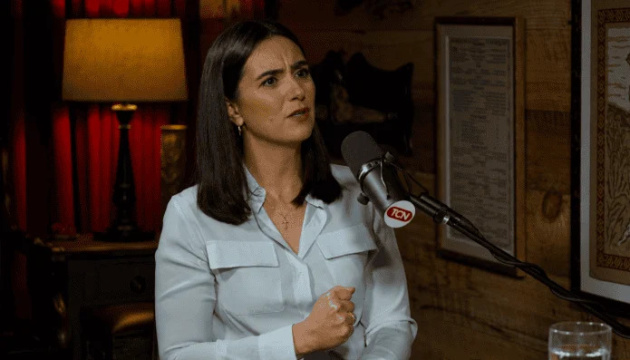
The interview given by Yuliia Mendel to American propagandist Tucker Carlson, published on May 11, 2026, served as a peculiar but highly revealing stress test for Ukraine’s entire information domain. Those who expected the former spokesperson for the head of state to trigger a large-scale internal crisis in Ukraine clearly miscalculated. Of course, we are not attempting to measure the public reaction with the mathematical precision of sociologists armed with representative samples and focus groups. Yet an analysis of hundreds — if not thousands — of comments under related posts still allows us to form a fairly accurate and objective picture of the public mood.
At first glance, such a demarche might have been expected to provoke panic or, at the very least, deep confusion among Ukrainians. Instead, society reacted in an entirely different manner. What emerged was not hysteria, but cold revulsion coupled with a clear understanding of the nature of what was unfolding. This episode crystallized several critically important aspects of Ukraine’s collective media resilience, demonstrating that after years of relentless information and psychological warfare waged by the Russian Federation, Ukrainians have learned to dissect propaganda narratives with remarkable precision — even when they are voiced by former “insiders.”
THE ANATOMY OF A PROPAGANDA OFFENSIVE — IS THE THREAT BEING OVERESTIMATED?
Analyzing the interview, experts largely agree that what unfolded was not merely an emotional outburst from a disgruntled former official, but a carefully engineered media product. The conversation was woven through with familiar Kremlin narratives, repackaged and calibrated specifically for an American audience. To better understand the potential consequences of the interview — and whether concerns about its impact may in fact be overstated — Ukrinform spoke with leading Ukrainian media analysts, communications specialists, and political scientists.
Oksana Romaniuk, director of the Institute of Mass Information and one of Ukraine’s leading media experts, argues that the episode should be viewed through the lens of an information warfare operation. “I do not see this interview as an ordinary media appearance or simply the emotional remarks of a former press secretary. In my view, this was a fully planned communications operation. You can clearly see signs of prior preparation — it was far from a spontaneous ‘stream of consciousness,’” Romaniuk says.
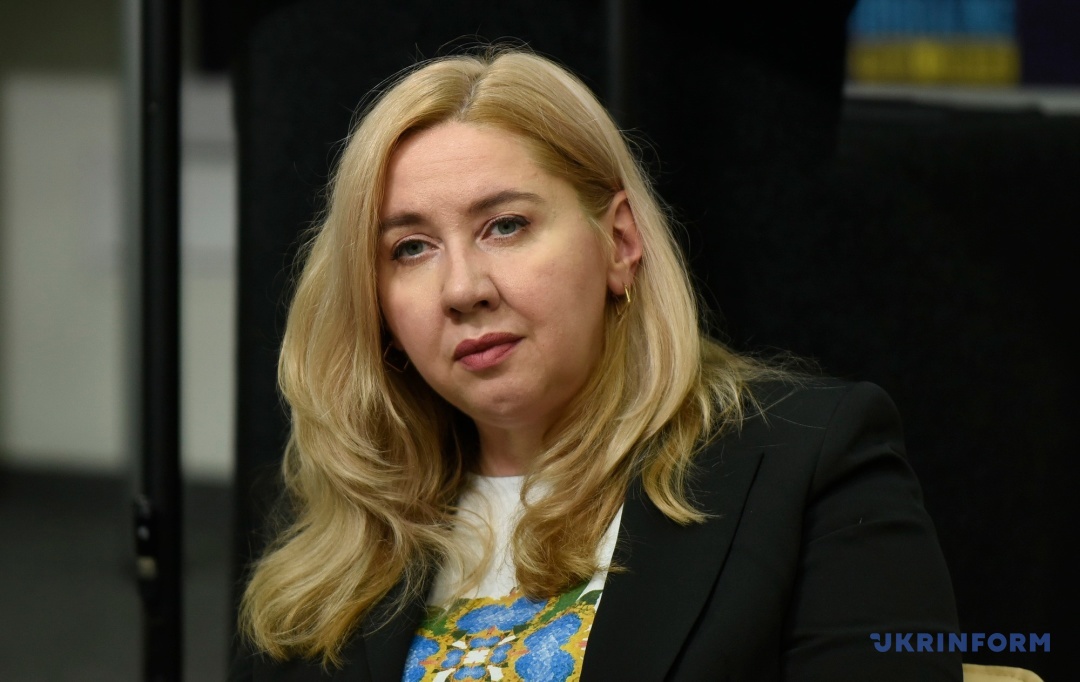
Oksana Romaniuk
According to Ms. Romaniuk, the intended target of this information strike was not the Ukrainian public. The primary audience was external — specifically the Western political establishment, and above all representatives of the U.S. Republican Party. The goal, she argues, was to cultivate an image of the Ukrainian government as uniquely toxic.
“And from there, to push audiences toward the conclusion that it is morally questionable to support Ukraine under such leadership. The purpose may have been to plant indirect doubt and demoralize allies. In that sense, the platform itself matters greatly. Tucker Carlson has long opposed large-scale foreign aid to foreign countries, including Ukraine,” she emphasizes.
As for the domestic impact, Romaniuk believes the attack largely failed within Ukraine itself, provoking mostly rejection of Mendel rather than any meaningful shift in public attitudes. At the same time, she warns against underestimating the possible external implications. Select excerpts from the interview will almost certainly be stripped of context and amplified by conservative media outlets in the West, serving as convenient material for anti-Ukrainian narratives and additional ammunition for those seeking to reduce military support for Kyiv.
Lena Chychenina, editor-in-chief of the popular media tabloid Antonina, highlights another important dimension of the controversy: the extent to which form can completely overshadow and ultimately invalidate content.
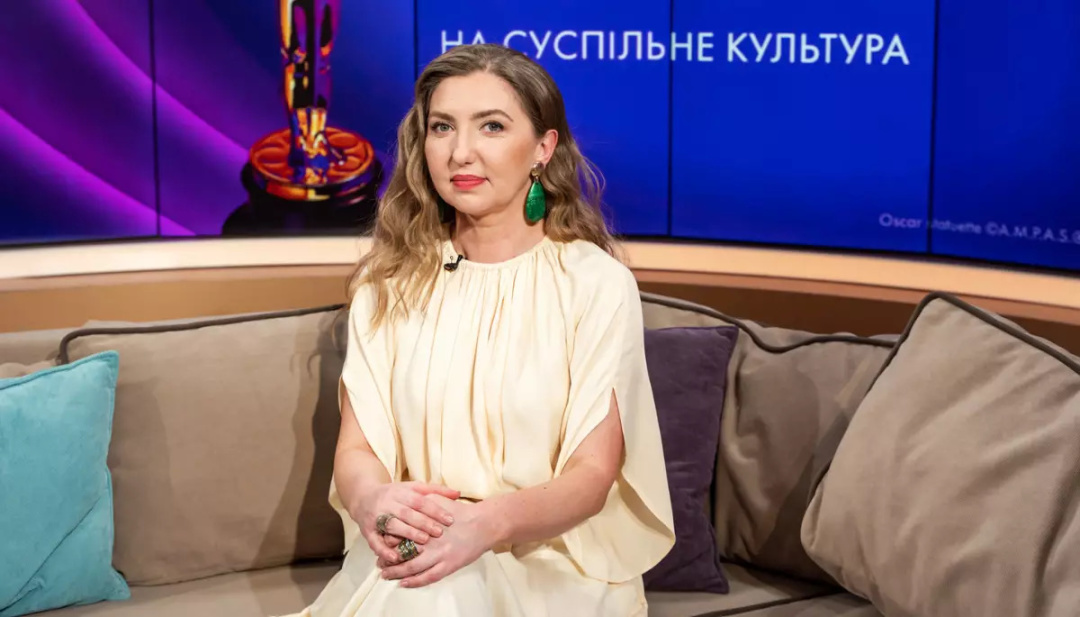
Lena Chychenina
“It was difficult to watch, first and foremost because of Mendel’s dreadful performance — especially during the moment when she addressed Putin. I agree that she came into the interview with a very clear plan, fully aware of what needed to be said and how it should be framed for Carlson’s audience,” Chychenina remarks.
The set of talking points, she notes, was painfully familiar: accusations of authoritarian tendencies on the part of the president, claims that he is unwilling to end the war because of personal financial interests, and attempts to portray corruption as something even more devastating than the war itself.
“Some of what Mendel said is, unfortunately, true. But the rest is complete nonsense.”
At the same time, Chychenina believes the scale of the domestic threat has been somewhat exaggerated. In her assessment, the interview undoubtedly damages Ukraine’s image abroad, but it contained nothing genuinely sensational or fundamentally new. Carlson’s audience may well interpret the statements through the lens of trust in an alleged “insider,” yet for most Ukrainians the scandal amounted to little more than a loud emotional irritant against the backdrop of far more consequential domestic political developments.
Continuing the discussion about both the performative and moral dimensions of the interview, journalist, political strategist, and media expert Tetiana Mokridi delivers one of the harshest assessments. In her view, the episode falls entirely outside the boundaries of ethics.
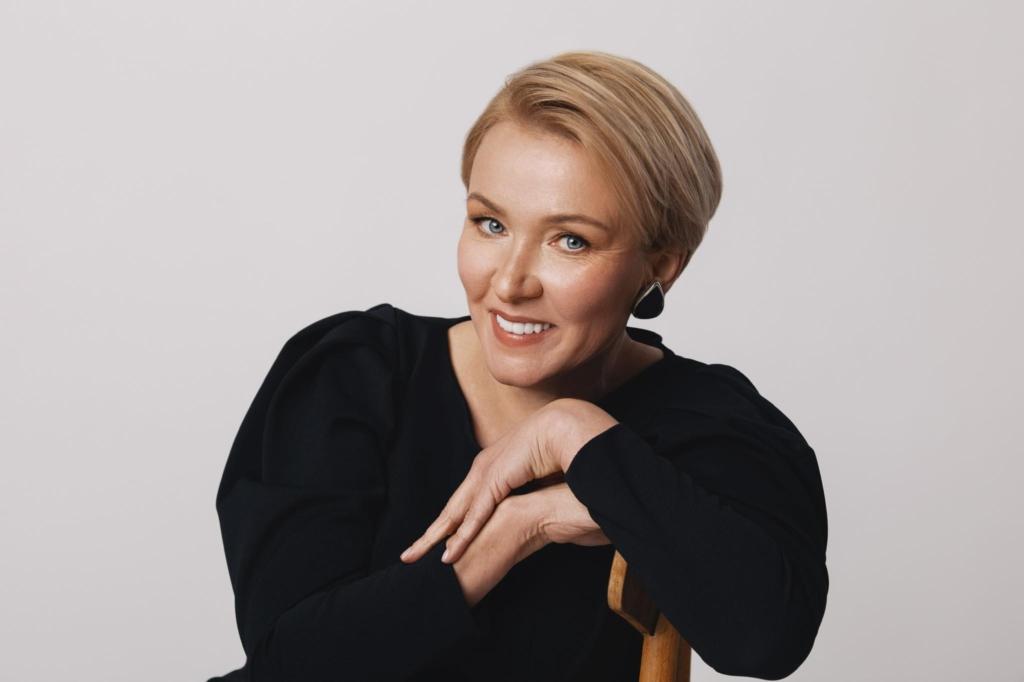
Tetiana Mokridi
“Mendel’s interview was not a strike against Zelenskyy — it was a strike against Ukraine, against every one of us. (…) Watching it felt like being thrown into a garbage dump with no way to wash the filth off afterward,” Mokridi says emotionally.
She argues that the constant grimacing, inappropriate laughter, and theatrical sighs created an intensely repulsive impression, almost as if the interviewee were taking pleasure in publicly dismantling her own country’s reputation.
“As someone who has worked closely with politicians and heads of state, I genuinely cannot understand her motivation. Is she truly that naive, or was this part of a deliberate operation?” the political strategist inquires.
Mokridi also points to the harsh realities of political backstage culture: people who once worked at the highest levels of power are often quickly discarded and left professionally irrelevant. Yet, she stresses, such personal frustration can never justify destructive bitterness of this kind.
“This is the conscious destruction of Ukraine’s international image. It is revolting,” she concludes.
A more measured but equally cautionary assessment comes from Tetiana Vorozhko, editor of the Ukrainian service of Voice of America:
“In the coming days and weeks, excerpts featuring Mendel’s remarks will likely spread widely across X, as well as through both social and traditional media, accompanied by the corresponding commentary.”
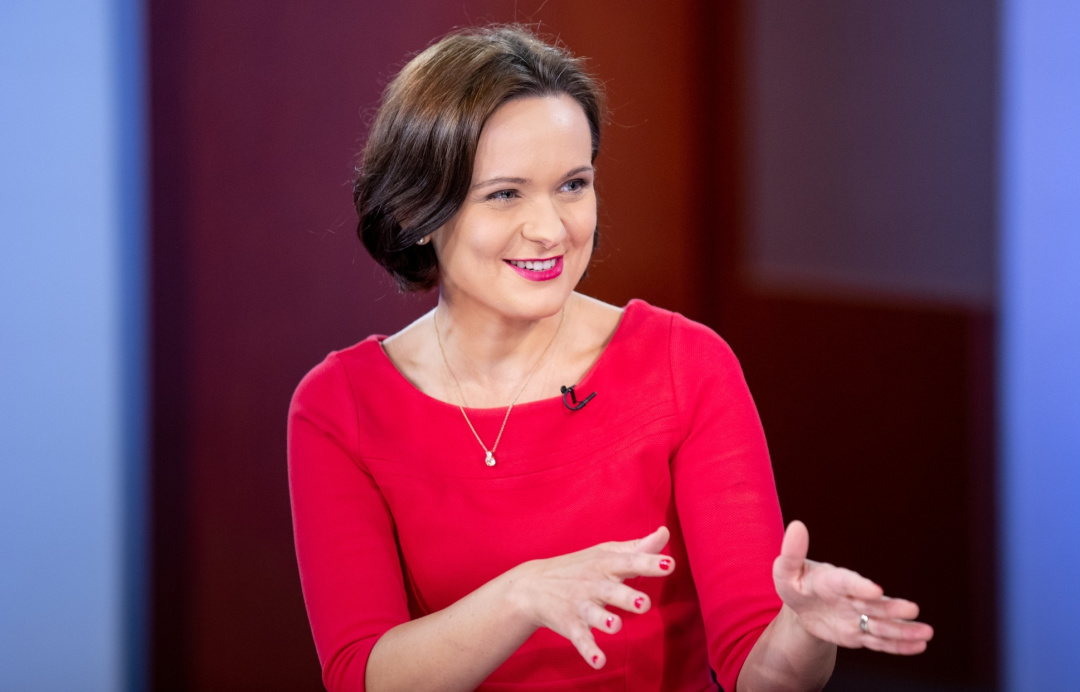
Tetiana Vorozhko
However, according to Tetiana Vorozhko, the true extent of the reputational damage inflicted on Ukraine will depend largely on how swiftly and effectively Ukrainian institutions and communicators are able to contain and neutralize the toxic aftereffects of the interview within the Western public discourse.
Video blogger, lecturer, and founder of the media literacy initiative How Not to Become a Vegetable, Oksana Moroz, approaches the situation from the perspective of long-term influence operations.
“In my opinion, this was a professionally staged and carefully directed production. It certainly does not look as though Mendel prepared it on her own — she was obviously assisted. What we are seeing is a highly deliberate compilation of specifically Russian narratives,” Moroz argues.
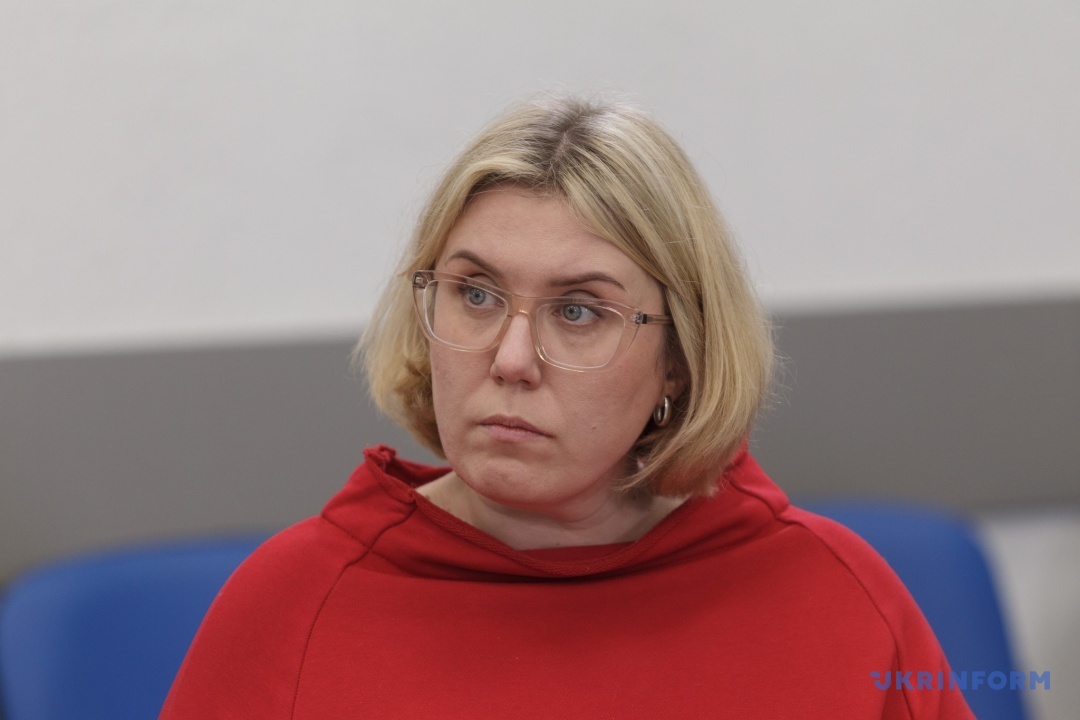
Oksana Moroz
The expert emphasizes that while Russian propaganda outlets had previously circulated similar fake claims, they now possess a far more powerful instrument: the figure of an alleged “insider.” In effect, the Kremlin has acquired a ready-made vehicle for promoting the narrative that individuals from the Ukrainian president’s inner circle have supposedly begun revealing the “truth.”
“There will absolutely be damage, but we will only be able to understand its actual scale over time. Much depends on how this story evolves. And I have the feeling that we have only seen part of the operation so far. I do not think the story ends with Mendel,” the media literacy expert predicts.
PUBLIC REACTION: A TEST OF PSYCHOLOGICAL MATURITY
How did the interview affect Ukrainians, and what broader public mood emerged in its aftermath?
The first and most powerful emotional wave, unsurprisingly, swept through Facebook. One of the clearest reflections of the public mood came from journalist Yuliia Zabielina, who succinctly captured the psychological dimension of the episode:
“There is no one easier to recruit than a person with a wounded ego, because intelligence services recruit either through weaknesses or through a desire for revenge.”
The remark resonated widely, generating hundreds of reactions. Most commenters did not even attempt to challenge the idea; on the contrary, many expanded upon it, arguing that vanity had become the perfect vulnerability through which this entire operation had been constructed.
Volodymyr Anfimov, a strategic communications expert, helped define the emotional tone of the broader reaction by writing that watching the interview had been “physically difficult — at times outright disgusting.” That phrase — “physically disgusting” — quickly spread across social media and became an unofficial yet remarkably precise summary of the entire Facebook discussion surrounding the interview.
A closer look at public reactions reveals a remarkably broad emotional spectrum. Journalist Oksana Shcherbak called for severe accountability, writing emotionally: “What she did against the people of Ukraine and the army deserves far more than a mere fine — it warrants much harsher consequences.”
At the opposite end of the emotional scale, user Yuliia Melnyk attempted to temper the outrage with a more pragmatic observation about the fleeting nature of the modern information cycle: “The reassuring thing is that by the day after tomorrow — or at most within a week — nobody will remember either Mendel or her interview.”
Taras Fedorchak offered perhaps the bluntest assessment: “This is simply a textbook collection of Russian propaganda narratives. She merely rented out her mouth. The saddest part is that she once served as the President’s press secretary. That should force us to think seriously about how people like Mendel, Arestovych, and similar figures ever end up in positions of responsibility.”
An almost tragicomic subgenre of commentary emerged beneath Mendel’s own social media post. Attempting to shield herself from the avalanche of criticism, she resorted to a biblical quotation: “Father, forgive them, for they know not what they do.”
The appeal to scripture only intensified public outrage. Many commenters interpreted the reference to God not as an expression of humility, but as a clumsy attempt to conceal what they viewed as a complete lack of conscience. Comparisons with Judas — the archetype of betrayal for money — quickly became one of the dominant motifs across dozens of otherwise unrelated comment threads.
“Thirty pieces of silver are still thirty pieces of silver …” media expert Oleksandr Hlushchenko remarked sarcastically.
On X, meanwhile, the discussion acquired a more geopolitical and openly conspiratorial character. Many commentators expressed firm conviction that the interview was not simply a personal attack on Zelenskyy, but part of a broader act of information aggression targeted against Ukraine as a whole. Theories circulated suggesting that the episode formed part of a larger political arrangement beneficial both to the Kremlin and to certain political actors in the United States interested in increasing pressure on Kyiv and forcing the Ukrainian leadership into painful concessions.
On Threads — a platform generally associated with a younger audience — a different format dominated. Users published lengthy explanatory posts aimed at people “who were out of the loop,” carefully dissecting Tucker Carlson’s background, explaining the nature of his audience, and clarifying why Mendel’s remarks could potentially damage international support for Ukraine.
Naturally, a small fringe attempted to echo or defend the interview’s protagonist. Yet those voices were almost entirely drowned out by the overwhelming chorus of condemnation.
Renowned political scientist Ihor Reiterovych, assessing the broader impact of the interview, argues that even on a purely formal level it appeared deeply peculiar: “It looked like a stream of consciousness built around a huge number of dubious — and at times outright fabricated — claims that Mendel herself seemingly had no real connection to whatsoever.”
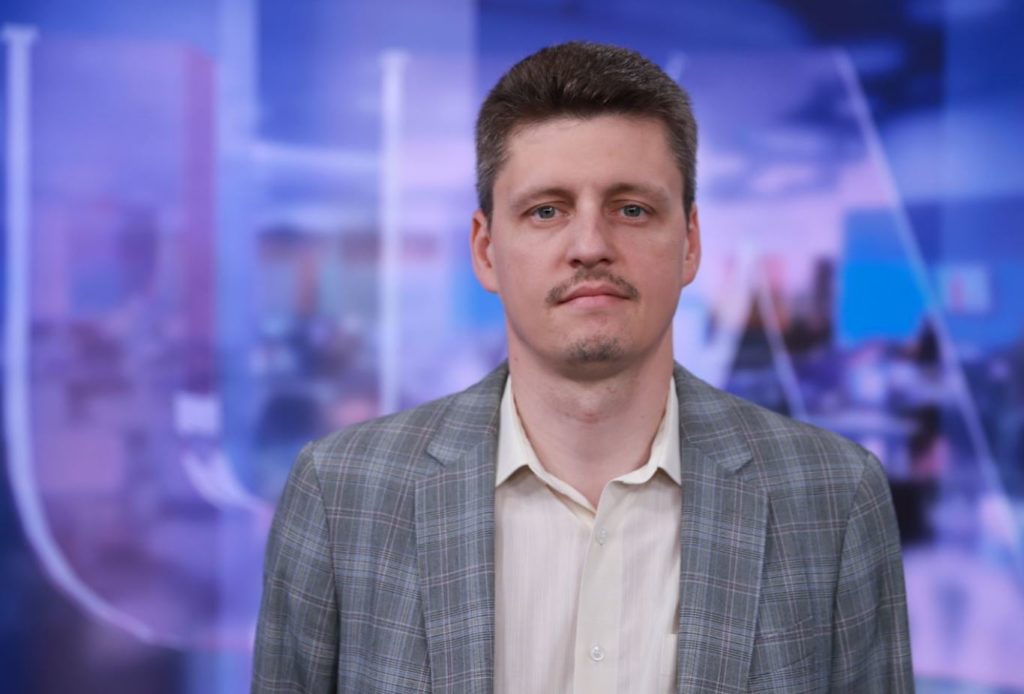
Ihor Reiterovych
According to Mr. Reiterovych, the primary force driving the entire episode was the former spokesperson’s overwhelming desire to once again feel like an influential insider connected to major state secrets.
“For roughly the last year and a half, Mendel had clearly been moving in this direction. If you examine her posts on X, similar themes and messages had already been emerging for quite some time. It did not yet appear as cringeworthy as it does now, but it was obvious that sooner or later all of this would culminate in some grand public ‘revelation,’” the expert explains.
The political scientist dismisses the idea that the initiative originated solely with Mendel and Tucker Carlson.
“I am almost certain she was used as an unwitting pawn, and it is entirely possible that Russian actors were behind the story and suggested the interview to Carlson in the first place. Because, frankly speaking, who is Yuliia Mendel in the global information landscape? And why would Carlson independently take an interest in her at all?” Reiterovych asks rhetorically.
In his view, Russian operatives simply identified Mendel’s psychological vulnerabilities and skillfully exploited her vanity and apparent desire for relevance or revenge. Carlson, meanwhile, merely received a convenient speaker capable of lending superficial legitimacy to familiar Russian propaganda narratives.
Reflecting on the domestic impact of the interview, Reiterovych points to what he sees as a paradoxical outcome:
“It is obvious that the information operation failed to produce the effect its organizers likely intended.”
Although Western right-wing conservative circles did receive additional material reinforcing narratives about corruption in Ukraine, Reiterovych argues that the broader impact was largely neutralized by Mendel’s excessive theatricality and unconvincing delivery.
“Her artificiality simply alienated serious audiences — and ironically, that ended up working in Ukraine’s favor,” he says.
Summarizing the public reaction, the political scientist notes that in the first hours after publication the interview genuinely “exploded” across Ukraine’s information domain.
“At certain moments, people were discussing Mendel even more actively than NABU’s suspicion notice against Andriy Yermak. The reason was simple: the entire spectacle looked so absurd and trashy that people simply could not ignore it.”
Yet, according to Reiterovych, the public response ultimately demonstrated something positive about the state of Ukrainian society. Ukrainians overwhelmingly perceived the interview not as credible criticism, but as a toxic spectacle. Even many of the government’s harshest critics refused to weaponize Mendel’s claims against the president.
Oksana Moroz shares that assessment.
“What we witnessed was primarily condemnation of Mendel herself. And paradoxically, the episode even contributed to a certain degree of social consolidation,” Moroz says.
She adds that one of the major concerns had been the possibility that opposition forces inside Ukraine would seize upon the interview’s narratives for domestic political infighting.
“Fortunately, that has not happened on any significant scale — at least not from what I can see in the public discourse. And that is unquestionably a positive sign.”
Another interpretation of the episode comes from communications specialist and media trainer Yaryna Klyuchkovska, who dismisses both simplistic explanations and popular conspiracy theories surrounding the interview.
“I have seen countless claims suggesting that Mendel’s appearance was designed to distract public attention from the Mindich case or the suspicions directed at Yermak. I have also seen accusations that National Anti-Corruption Bureau of Ukraine (NABU) and Specialized Anti-Corruption Prosecutor's Office of Ukraine (SAPO/SAP) are somehow working together with Russia to undermine the Ukrainian Government. I do believe these events are interconnected — but not in the simplistic way people are describing,” Klyuchkovska argues.
In her assessment, the interview had one central objective: to influence the atmosphere and potential outcomes of future negotiations between Ukraine and Russia. From this perspective, the American audience was deliberately presented with the image of a weak, unstable, and allegedly illegitimate Ukrainian president — a leader who cannot be negotiated with seriously and whose position appears increasingly fragile.
“At the very least, this interview will reinforce anti-Ukrainian voices in the United States. At worst, it could influence Trump himself and shape his position,” the expert warns.
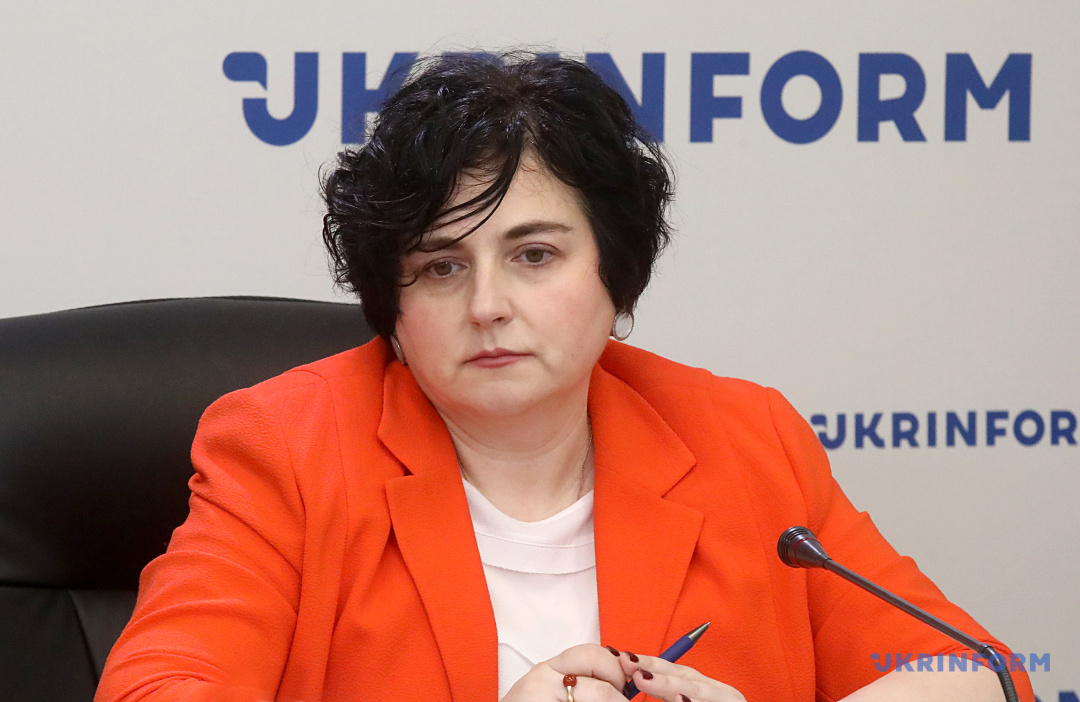
Yaryna Klyuchkovska
Klyuchkovska argues that the internal Ukrainian scandals surrounding figures close to the president merely served as a convenient tactical bonus for hostile actors rather than the true cause behind the release of the interview. The deeper catalyst, she believes, lies in the Kremlin’s own increasingly uncomfortable position amid ongoing geopolitical maneuvering and negotiations.
“The entire May 9 parade story turned into a failure for Russia. Perhaps even Zelensky’s sarcastic executive order regarding the Moscow parade contributed to someone finally pulling the trigger and releasing this interview — which may well have been recorded long ago,” she reflects.
In her concluding remarks, Klyuchkovska offers a symbolic yet cautiously optimistic interpretation of the broader situation:
“To me, this suggests that Russia’s position is far weaker than it would like the world to believe. Because if they are placing their bets on Yuliia Mendel’s nonsense, then the obvious question arises: who is it that truly has no cards left?”
Ultimately, if we ask whether the interview achieved its presumed destructive objective inside Ukraine, the answer appears both categorical and paradoxical: no — in many respects, it produced the exact opposite effect.
The reaction across social media, combined with the assessments offered by experts, revealed several fundamentally important truths about the condition of Ukrainian society in the fifth year of a brutal and exhausting all-out war.
First, what we are witnessing is a genuine immunity to crude propaganda — an immunity forged through years of relentless information warfare. Despite deep public exhaustion and immense national suffering, Ukrainians have learned to recognize Kremlin narratives almost instinctively. None of the false or manipulative claims voiced by the former presidential spokesperson gained meaningful traction within society; on the contrary, they provoked broad and largely unanimous indignation.
Second, the episode demonstrated that Ukrainian society has developed a clear distinction between legitimate criticism of the Government and the defense of national sovereignty. Even some of the fiercest critics of Bankova condemned the interview, reflecting a growing political maturity and a shared understanding that undermining the country’s international reputation in the midst of war crosses a fundamental line.
Third — and perhaps most importantly — the scandal unexpectedly produced a consolidating effect. People with radically different political views found themselves united by a common sense of outrage. In a society strained by years of war, polarization, and fatigue, such moments of consensus are exceptionally rare — yet profoundly important for a nation still fighting for its freedom and survival.
Myroslav Liskovych. Kyiv