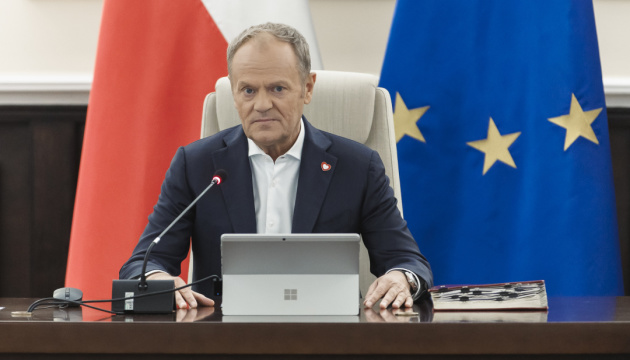
Tusk warns Polish Sejm of consequences of anti-Ukrainian sentiment
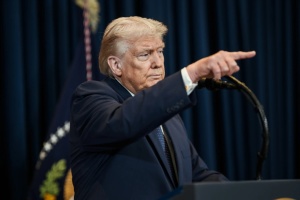
During his speech in the Sejm, the head of the Polish government criticized remarks made by right-wing politicians and certain Polish journalists regarding Andrzej Szeptycki, the Deputy Minister of Science and Higher Education in the current Polish government, who is of partial Ukrainian descent, according to a Ukrinform correspondent.
During his speech, Tusk quoted the well-known Polish journalist Dorota Gawryluk, who stated on Polsat News a few days ago: “I wonder how it is possible that a person of Ukrainian origin who represents Ukrainian interests is a deputy minister in the Polish government [Andrzej Szeptycki].”
According to the prime minister, such statements are gradually creating a dangerous trend in which people are judged not by their professional qualities and loyalty to the state, but by their nationality.
“From such isolated incidents, isolated insults, and media statements, a wave is beginning to form that not only demeans decent, honest, and patriotic Poles but also becomes dangerous to the very essence of Poland,” Tusk emphasized.
He warned that the search for people of “wrong origin” could have dangerous consequences for Polish democracy and society. He also reminded that this kind of “hunt” for people based on nationality has always led to disasters, as evidenced by the history of the last 150 years, particularly World War II.
The Polish Prime Minister noted ironically that if criteria of origin were applied in Polish history, the merits of many prominent Polish figures could be called into question.
“As a historian, I cannot help but mention that Polish history has included such ‘suspicious’ figures as Copernicus, Chopin, Kościuszko, and to some extent Piłsudski, Vladyslav Jagiello, the entire Jagiellonian dynasty, and Sigismund III Vasa,” the head of the Polish government noted.
Tusk reminded the audience that King Sigismund III Vasa was Swedish, and King Stephen Báthory did not speak Polish at all.
“Check them out, don’t delay for a moment, find out if they had Polish roots,” the prime minister said ironically to his political opponents.
The head of government also recalled the solidarity that Poles demonstrated following Russia’s full-scale invasion of Ukraine in February 2022.
“There was a moment when, regardless of our origins and feeling ourselves to be citizens of Poland, we showed great solidarity that once again impressed the whole world. This happened when we helped Ukrainian families after Russia’s attack on Ukraine,” Tusk emphasized.
In his view, it is precisely this solidarity—and not the division of people by origin, race, or skin color—that is one of the foundations of the Polish state and its security.
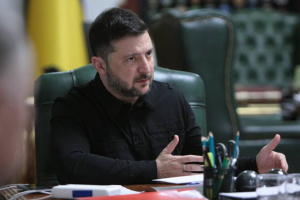
Anti-Ukrainian sentiments have significantly intensified in Poland recently, often accompanied by verbal and physical aggression toward Ukrainians. A major surge of anti-Ukrainian sentiment in Polish society, political circles, and the media occurred after reports emerged that Ukrainian President Volodymyr Zelensky had bestowed the honorary title “in the name of the Heroes of the UPA” upon the “North” Special Operations Center of the Special Operations Forces of the Armed Forces of Ukraine. The Polish Ministry of Foreign Affairs criticized this decision. In turn, the President of Poland proposed stripping Zelensky of his Polish state award—the Order of the White Eagle. Following a meeting of the Order’s Chapter, the Office of the President of Poland announced that Nawrocki would make a decision on the matter “at the appropriate time.”
Polish Prime Minister Donald Tusk stated that Kyiv must take responsibility for the crisis that has arisen in relations with Warsaw and propose solutions that would satisfy Poland.
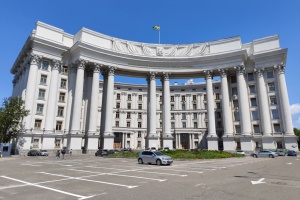
The Ukrainian Ministry of Foreign Affairs condemned the critical remarks directed at Polish Deputy Minister of Science Andrzej Szeptycki regarding his stance on the Ukrainian Insurgent Army (UPA) and called on Polish politicians to uphold European values and respect the right to one’s own position.
Poland’s Deputy Minister of Science and Higher Education Andrzej Szeptycki (great-grandson of Metropolitan Andrzej Szeptycki’s brother) faced criticism for a statement in which he compared the UPA to Polish anti-communist underground fighters. Specifically, in an interview with TOK FM radio, Szeptycki said that the UPA “was a formation that—regardless of what you say about the Volhynia crime [the Polish narrative referring to the Volhynia tragedy]—fought for Ukraine’s independence, fought within the framework of this Ukrainian vision, primarily against Soviet rule, and it was such a hopeless struggle.”
Following this, he faced backlash from politicians on the Polish right and some representatives of the Polish media, who accused him of defending Ukraine’s interests rather than Poland’s.